When it comes to fine wine, prestige, rarity, and provenance are the key ingredients behind eye-watering price tags. In the upper echelons of the market, a handful of estates consistently command staggering values – whether due to microscopic production, historic vineyard sites, or legendary performances at Christie’s and Sotheby’s auctions. Many of these benchmark producers have earned cult-like status, making their bottles of wine some of the rarest luxury assets in the world.
Quick highlights
-
These ten producers represent the highest average bottle prices in the world, based on auction records, secondary-market performance, and long-term price appreciation.
-
Many of the wines on this list are produced in tiny quantities, making them some of the rarest wines in the world and highly sought after by collectors.
-
Several estates have shown exceptional investment returns, with Burgundy and Piedmont leading global price performance over the last decade.
In this 2025 refresh, we explore the world’s most valuable wine brands – benchmark estates whose bottles of wine continually reinforce their place at the pinnacle of luxury and investment potential.
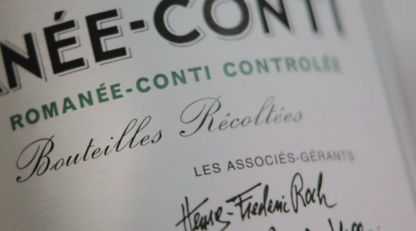
1. Domaine de la Romanée-Conti (DRC) – Burgundy, France
Costliest wine: Domaine de la Romanee-Conti, Romanee-Conti Grand Cru
Average case price: £212,246
Ten-year performance: +138%
Often referred to as the Holy Grail of wine, DRC sits at the pinnacle of global fine wine. Its Grand Cru vineyards – including La Tâche, Richebourg, and Romanée-St-Vivant – produce some of the rarest wines in the world, but it is the Romanée-Conti monopole that commands the highest prices. A single bottle can surpass £100,000 at auction, with the record set at a Christie’s auction in 2018, when a 1945 vintage sold for $558,000 (£422,663). This remains one of the most expensive bottles ever purchased.
2. Liber Pater – Graves, Bordeaux, France
Average case price: £142,237
Ten-year performance: N/A
Liber Pater has rewritten the rulebook on rarity. Producing only a few hundred bottles per vintage using pre-phylloxera varietals and ancient winemaking techniques, the estate has become one of the most controversial names in fine wine. Loïc Pasquet’s mission to revive Bordeaux’s historical identity has resulted in some of the priciest wines in the world – but he famously restricts resale. As Pasquet puts it: ‘I want to be sure people buy and drink.’
3. Domaine Leroy – Burgundy, France
Most expensive wine: Domaine Leroy, Richebourg Grand Cru
Average case price: £117,178
Ten-year performance: +522%
Under the leadership of Lalou Bize-Leroy, Domaine Leroy produces Burgundy’s most meticulously farmed biodynamic wines. Its Musigny, Richebourg, and Romanée-St-Vivant bottlings are among the rarest – and priciest – in the world. The brand consistently tops Liv-ex’s Power 100 list – a ranking of the most powerful wine brands in the world – based on a combination of year-on-year price performance, secondary market trade by value and volume, number of wines and vintages traded, and average price of the wines in a brand. Leroy itself has been a big driver behind Burgundy’s rising share of the investment market.
4. Domaine Jean Louis Chave – Rhône, France
Top wine: Domaine Jean Louis Chave, Hermitage, Ermitage Cathelin
Average case price: £62,771
Ten-year performance: +191%
A name revered in the Northern Rhône and far beyond, Domaine Jean-Louis Chave represents the pinnacle of Hermitage winemaking. With a family lineage stretching back to 1481, the estate combines centuries of tradition with exacting modern standards. Its flagship Hermitage Rouge, a masterful blend of parcels including Le Méal, Les Bessards, and L’Hermite, is one of the most celebrated and age-worthy Syrahs in the world. Even rarer is the Cuvée Cathelin, produced only in exceptional vintages and released in microscopic quantities. These wines can fetch upwards of £5,000 per bottle, placing it among the rarest wines of France.
5. Screaming Eagle – Napa Valley, USA
Average case price: £37,466
Ten-year performance: +84%
California’s most famous cult wine and one of the rarest wines in the world, Screaming Eagle Cabernet Sauvignon is available almost exclusively via a fiercely protected mailing list. At auction, bottles can reach astonishing levels: at the Napa Valley Auction in 2000, a 6-litre bottle of the 1992 vintage sold for $500,000 (£378,815). Its combination of scarcity, critical acclaim, and celebrity demand has cemented it as the crown jewel of American fine wine.
6. Château Petrus – Pomerol, Bordeaux, France
Average case price: £30,655
Ten-year performance: +61%
Made almost entirely from Merlot, Château Petrus leads the Right Bank in both quality and price. The vineyard’s unique terroir, characterised by an iron-rich clay soil known as ‘crasse de fer,’ is considered a crucial factor in the wine’s distinctive character and depth. The brand enjoys legendary status among wine investors and critics alike, with top vintages like 1982, 2000, and 2009 often commanding five-figure sums per bottle.
7. Le Pin – Pomerol, Bordeaux, France
Average case price: £27,957
Ten-year performance: +78%
Tiny, exclusive, and almost mythically rare, Le Pin is one of the most coveted names in Bordeaux and the world. Situated on just 2.7 hectares in the heart of Pomerol, Le Pin was virtually unknown until the late 1970s, when Belgian entrepreneur Jacques Thienpont purchased the land and began producing micro-parcel Merlot in a garage-like setting. Le Pin swiftly ascended to cult status, helped by sky-high critic scores, minuscule production, and a hedonistic, opulent style that captivated the market. Made entirely from Merlot and produced in quantities of only 500 to 600 cases per year, Le Pin is the ultimate Pomerol rarity.
8. Krug – Champagne, France
Priciest wine: Krug, Clos du Mesnil
Average case price: £16,027
Ten-year performance: +123%
Krug sits at the top of the Champagne hierarchy. While its Grande Cuvée is a staple among collectors, the single-vineyard bottlings – Clos du Mesnil (Chardonnay) and Clos d’Ambonnay (Pinot Noir) – are among the most expensive Champagnes on the market. With just over one hectare of vines and extremely limited production, Clos du Mesnil rivals the world’s greatest white wines in both prestige and investment potential.
9. Giacomo Conterno – Piedmont, Italy
Top wine: Giacomo Conterno, Barolo, Monfortino Riserva
Average case price: £11,651
Ten-year performance: +183%
Widely regarded as the benchmark for traditional Barolo, Giacomo Conterno is a name that commands deep respect. The crown jewel of the estate is the Barolo Monfortino Riserva, which has seen prices rise 183% on average in the last decade. Fermented in old wooden vats and aged for up to seven years in large Slavonian oak casks, Monfortino’s scarcity and critical acclaim have made it one of Italy’s most sought-after wines.
10. Henschke – Eden Valley, Australia
Costliestpr wine: Henschke Hill of Grace
Average case price: £8,205
Ten-year performance: +148%
One of Australia’s most storied and respected family-owned wineries, Henschke has been producing wine in South Australia’s Eden Valley since 1868. Now in its sixth generation, the estate is led by Stephen and Prue Henschke, who have turned it into a pioneer in biodynamic viticulture and a benchmark for site-driven Australian wine. While Henschke produces a range of acclaimed wines, its global reputation is anchored by a single, sacred site: Hill of Grace. First bottled in 1958, Hill of Grace is sourced from a tiny, pre-phylloxera vineyard planted in the 1860s – among the oldest Shiraz vines in the world. Hill of Grace is made only in exceptional vintages, and with limited production – sometimes fewer than 2,000 cases – it has become one of the most collectible and expensive wines from the Southern Hemisphere.
A final word
From Burgundy’s legendary monopoles to Napa’s cult Cabernet and Bordeaux’s Right Bank icons, these estates represent the pinnacle of fine wine. Whether you’re seeking a particularly rare wine, a historically significant bottle once adored by collectors like Thomas Jefferson, or simply exploring the most prestigious wines in the world, these producers remain foundational pillars of any serious investment portfolio.
For a deeper look at wine investment opportunities in top-tier producers, explore Wine Track, or speak with our team about sourcing bottles from these benchmark estates.
FAQ: The World’s Most Expensive Wine Brands
What makes a wine brand so expensive?
A combination of factors drives high prices: tiny production volumes, unique terroir, historic vineyards, consistent critic acclaim, and strong performance on the secondary market. Provenance and auction history also play major roles.
Which wine has sold for the highest price at auction?
One of the highest recorded prices is the 1945 Domaine de la Romanée-Conti, which sold at Christie’s for $558,000. Other icons like Château Lafite Rothschild, Petrus, Cheval Blanc, and historic bottles linked to famed collectors have also achieved extraordinary auction results.
Are expensive wines a good investment?
Top-tier wines from Burgundy, Bordeaux, Champagne, and Piedmont have shown strong long-term performance, with several producers on this list achieving triple-digit growth over the past decade. However, liquidity, vintage selection, and provenance are crucial.
Do red wines or white wines dominate the luxury market?
Red wines remain the dominant force at the top end of the market – Burgundy, Bordeaux, Napa, and Piedmont lead in both value and volume. However, rare white wines such as Krug Clos du Mesnil, DRC Montrachet, and elite German Riesling can reach equally impressive price tags.
How can I buy bottles from these estates?
Fine wine merchants, private client brokers, and trusted investment platforms like WineCap can help source rare wines from benchmark producers, often with verified provenance and storage.