Categories
Learn

What are the benefits of investing in fine wine?

Fine wine has evolved from a niche passion into a recognised alternative investment asset, attracting collectors, high-net-worth individuals, and professional wine investors alike. While many are initially drawn in by the romance and heritage of wine, the financial case for buying wine for investment is compelling in its own right.

Unlike traditional financial markets, fine wine offers a combination of strong historical performance, low volatility, and tangible value. It also benefits from unique structural factors – finite supply, rising global demand, and favourable tax treatment – that are rarely found together in other asset classes.

Below, we explore seven key reasons why fine wine deserves serious consideration as a long-term investment and portfolio diversifier.

A high-performing asset class

Fine wine has been one of the strongest-performing alternative assets over the past three decades. Since January 1988, the compound annual growth rate of leading fine wine indices has averaged around 12.6%, outperforming many mainstream assets over the long term.

Notably, fine wine has demonstrated resilience during periods of market stress. During the Covid-19 pandemic, while equities experienced sharp volatility, fine wine prices continued to rise. In 2021, the fine wine market delivered record-breaking performance, surpassing global equity benchmarks.

Even more recently, the contrast remains striking. Over the past year, the Liv-ex 1000 index – the broadest measure of the fine wine market – rose significantly, while major indices such as the FTSE 100, S&P 500, and Nasdaq either lagged or declined. For long-term investors seeking steady appreciation rather than short-term speculation, fine wine has proven its credentials.

Tangibility and intrinsic value

One of fine wine’s most attractive features is its tangibility. Wine is a physical, tangible moveable property – often referred to legally as a chattel – rather than a paper asset or digital entry.

Unlike shares or cryptocurrencies, fine wine does not disappear in a market crash. It exists independently of financial systems, monetary policy, or central bank decisions. This intrinsic value places it in the same category as other tangible assets such as art or property, but without the high maintenance costs, regulatory burdens, or reliance on a single national economy.

Additionally, fine wine is globally traded through established wine merchants and international exchanges, making it far more liquid than many people assume.

A stable, low-risk investment

Fine wine has historically exhibited low volatility compared to equities and commodities. Prices tend to move gradually rather than reacting sharply to short-term news or sentiment.

As a physical asset with proven demand, fine wine has also acted as an effective hedge against inflation and economic uncertainty. During periods of rising prices or recession, investors often rotate into real assets with limited supply – an environment in which fine wine has consistently performed well.

For investors prioritising capital preservation alongside growth, this stability is a key advantage.

Finite supply and rising demand

Investment-grade wine is fundamentally scarce. Each wine is produced in limited quantities, tied to a specific vintage, and subject to strict production rules. Once bottled, supply can only ever decline as wines enter their drinking windows and are consumed.

At the same time, demand continues to grow. The global fine wine market has expanded beyond its traditional European base, with increasing participation from Asia, North America, and emerging wealth centres. This imbalance – finite supply paired with rising demand – is a powerful driver of long-term price appreciation and is relatively unique within the wine industry.

An effective portfolio diversifier

For investors looking to diversify their portfolios, fine wine offers a compelling solution. Numerous studies have shown that fine wine prices have little correlation with traditional financial markets such as equities and bonds.

This low correlation means that when stock markets fall, fine wine often holds steady or even appreciates. As a result, wine investors use fine wine to reduce overall portfolio risk while maintaining return potential.

In an era where traditional diversification has become harder to achieve, alternative assets like fine wine are playing an increasingly important role in long-term wealth strategies.

Tax efficiency and CGT exemption

Fine wine also benefits from favourable tax treatment in many jurisdictions. In the UK, most fine wine qualifies as a “wasting asset” with a predictable life of less than 50 years, making it exempt from Capital Gains Tax (CGT) when sold.

This wasting asset exemption – sometimes referred to as the chattels exemption – means that when investors sell their wine, gains are typically exempt from CGT. Importantly, fine wine is also not subject to income tax, provided it is held for capital appreciation rather than trading as a business.

While fortified wines may fall outside this exemption due to their longer lifespan, the vast majority of investment-grade wines benefit from this tax-efficient structure, allowing investors to retain more of their returns over the long term.

Passion investment

Finally, fine wine occupies a rare space where financial return and personal enjoyment intersect. Many wine investors are drawn to the market through their interest in wine itself, only later recognising its investment potential.

Unlike most assets, fine wine offers a unique optionality: you can buy, hold, sell your wine – or drink it. Even in the unlikely event that market conditions change, the asset still delivers intrinsic enjoyment, reinforcing its appeal as a passion investment.

Working with a reputable wine merchant ensures proper storage, authentication, and market access, allowing investors to participate professionally while remaining connected to the culture and heritage of wine.

Final thoughts

Fine wine is no longer simply a collector’s indulgence. It is a proven, long-term investment asset with a strong track record, tangible value, low volatility, and compelling tax advantages. For those looking to diversify their portfolios, protect wealth, and invest in something with real-world substance, buying wine for investment offers a rare combination of performance and pleasure.

As global demand continues to grow and supply remains finite, fine wine’s role in sophisticated investment portfolios is only set to expand.

Ready to get started now you know more about investing in wine? Speak to one of WineCap’s investment experts to discover the next steps on your wine journey.

Categories
Learn

How does wine investment work?

Are you considering investing in wine and want to know how wine investment works? You’re in good company. More investors than ever are discovering that fine wine is a top-performing alternative asset, offering stability, diversification, and strong long-term returns. At moments when inflation rises – such as in April 2022, when UK inflation hit 7% according to the Office for National Statistics – many investors look for assets outside the stock markets. Fine wine has long been recognised as a hedge against volatility and a proven store of value.

But how does it actually work? And what should a new investor know before building a fine wine portfolio? Below, we break down the essentials in a clear, practical way so you can begin your journey with confidence.

Start with a medium to long-term view

Wine investment is not a quick win or short-term speculation. It is built on a simple but powerful idea: fine wine is an improving asset in diminishing supply. As wines mature in the bottle, their quality improves and the available stock naturally decreases as bottles are consumed worldwide. This combination of rising quality and falling supply can support long-term price appreciation.

For this reason, investors should approach wine with a medium to long-term mindset. We recommend planning to hold wines for a minimum of five years, and often longer for exceptional vintages, cult wines, or bottles from regions with consistent global demand.

Why long term? Because:

  • Wines reach their optimum drinking windows slowly.

  • Global demand builds over time as critics reassess the wine.

  • Supply reduces steadily as consumers drink the vintage.

  • Long-term scarcity typically supports higher secondary-market value.

Patience is absolutely essential. Those who commit to a sensible holding period tend to see the best results.

Decide how much you want to invest – then diversify

Once you’ve established your budget, the next step is to diversify your investment portfolio. A successful fine wine strategy mirrors the principles of any well-managed portfolio: spread risk, seek balance, and avoid overexposure to a single region or producer.

Most investors begin by allocating capital across traditional, blue-chip regions, especially:

  • Bordeaux – long considered the backbone of fine wine investment

  • Burgundy – prized for limited production and strong global demand

  • Champagne – increasingly popular with both investors and collectors

  • Italy – home to iconic Super Tuscans and age-worthy Barolos

  • California – known for highly collectible cult wines and strong critic sentiment

Diversification helps ensure your wine investment portfolio is resilient to market movements. If one region slows, others may still perform strongly. Many investors also choose to include a small proportion of cult wines, which can offer impressive upside potential but should be balanced with more stable, widely traded wines.

Your WineCap advisor can help shape a portfolio tailored to your goals, risk appetite, and preferred investment horizon.

Store your wines professionally in a bonded warehouse

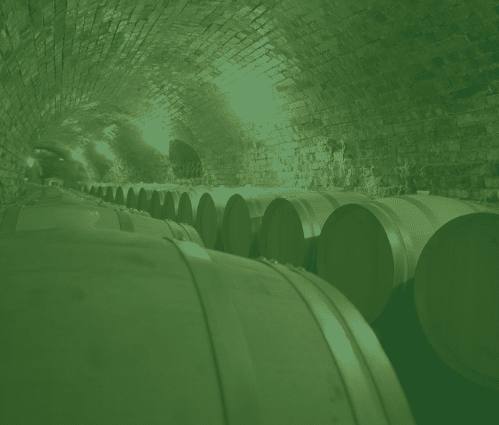
Perfect provenance is one of the most important factors in protecting and enhancing the value of your wines. When you invest seriously, your bottles must be kept in the correct conditions – not in a home cellar, a garage, or a private unit, but in a professional storage facility.

At WineCap, all wines are stored in a government-regulated bonded warehouse, which offers:

  • Ideal temperature and humidity

  • Total traceability and insurance

  • Secure, monitored conditions

  • Full documentation of the wine’s provenance

  • No duty or VAT applied while the wine remains in bond

Storing wine in bond is often the preferred method for investors, because it keeps the wine in mint condition and significantly simplifies the eventual resale process. Buyers in the secondary market are willing to pay more for wines stored exclusively in a bonded warehouse, as the chain of custody is completely transparent.

If you choose to withdraw your wines for personal drinking enjoyment, duty and VAT will apply at that stage. Until then, storing in bond keeps the investment structure clean, secure, and tax-efficient.

Understand fees, costs, and tax considerations

Not all wine investment platforms operate the same way, and some brokers charge annual management fees to oversee your portfolio. At WineCap, we pride ourselves on not charging a management fee and offering some of the most competitive brokerage rates in the industry.

Other potential costs include:

  • Storage and insurance (typically very modest compared to the asset value)

  • Transaction fees when buying or selling

  • Payment of duty/VAT only if you withdraw wine from bond

It’s also helpful to understand how wine is treated for tax purposes. In the UK, fine wine is generally considered a “wasting asset,” meaning it is typically exempt from capital gains tax. However, individual circumstances vary, and international investors may be subject to different rules – so independent advice is always recommended.

Plan your exit strategy 

Knowing how you will eventually sell your wine is just as important as knowing what to buy. The best exit route depends on the wine, its rarity, the condition, and the market climate at the time of sale. At WineCap, we analyse real-time market data, critic scores, historical performance, and price velocity to guide you toward the most favourable option.

We also help time the sale strategically. In the wine market, timing can make a meaningful difference. For example, when a wine receives an upgraded critic score or enters its ideal drinking window, demand – and therefore price – may rise. A well-considered exit strategy can significantly enhance overall returns.

How wine investment differs from wine clubs, wine merchants & building a wine collection

For newcomers, it’s useful to distinguish wine investment from other parts of the wine world.

Wine clubs

Wine clubs focus on drinking enjoyment, discovery, and convenience. While they may introduce you to great wines, bottles are intended for consumption – not long-term appreciation. Club wines are not typically stored in bonded warehouses, meaning they are unsuitable for investment.

Wine merchants

Traditional wine merchants excel at sourcing exceptional bottles and offering personal recommendations. However, their role is centred on consumption rather than managing a strategic investment portfolio. Wine investment requires data-driven decision-making, market analysis, and ongoing portfolio monitoring – services merchants are not designed to provide.

Building a wine collection

A personal wine collection is built for pleasure, passion, and future drinking. By contrast, an investment portfolio is constructed for financial performance. It focuses on world-class estates, investment-grade vintages, liquidity, and the potential for long-term value appreciation rather than personal taste.

Understanding these distinctions helps investors see why professional storage, market analysis, and structured portfolio management are essential components of a good investment.

Final thoughts

Wine investment offers an enjoyable and rewarding way to diversify your assets, reduce reliance on volatile stock markets, and build long-term financial value. By adopting a medium- to long-term view, diversifying your portfolio, storing wines professionally in a bonded warehouse, understanding the associated costs, and preparing a clear exit strategy, you can enter the market with confidence and clarity.

WineCap combines expert analysis, transparent pricing, and world-class portfolio management to help investors make smarter, data-driven decisions. Whether you’re starting your first wine investment or expanding an existing portfolio, we’re here to help every step of the way.

Ready to start investing in wine? Find out more by downloading our free guide.