Categories
News

E. Guigal Buys Château d’Aqueria

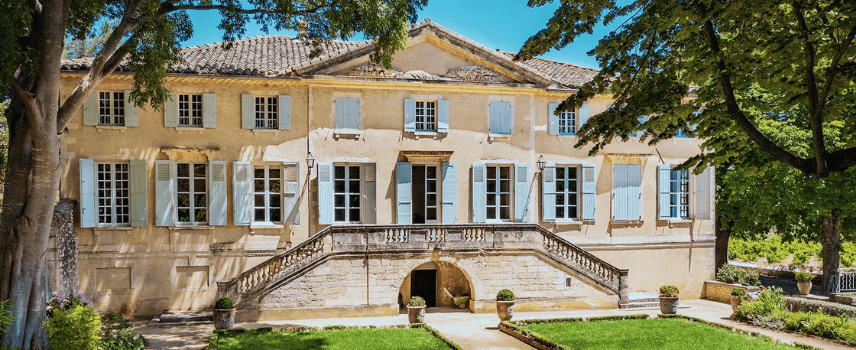
The esteemed northern Rhône producer E. Guigal has acquired Château d’Aqueria in Tavel, one of the jewels of the southern Rhône. The celebrated maison made the purchase from the de Bez family and the estate spans 242 hectares with 168 under vine. Some 100 acres are in Tavel with the remainder in the neighbouring Lirac appellation.

This isn’t Guigal’s first purchase in the southern Rhône; the maison bought Domaine de Nalys – now Château Nalys – five years ago. It had previously sourced grapes from there over the course of three centuries for its négociant arm.

Château d’Aqueria dates back to 1595, when Louis Joseph d’Aqueria purchased the land for grape growing. The estate has been bought and sold over the centuries and, most recently, Paul de Bez’s sons, Vincent and Bruno, were in charge of it until this new purchase. 

The Tavel appellation lies just across the Rhône river from Châteauneuf-du-Pape and spans some 933 hectares. The region is famous for producing complex and deeply coloured rosé wines from primarily Grenache and Cinsault grapes, with Syrah and Mourvedre supporting. Tavel rosé must have at least 11% alcohol which renders it suitable for ageing.

The estate produces approximately 16,000 cases of wine each year and it will be kept by E. Guigal as a separate domaine, aside from the négociant arm. 

Lirac is gaining more and more interest recently as Châteauneuf-du-Pape lovers look to this region which shares a similar terroir. Producers from Châteauneuf have been buying vineyards here and making more accessibly priced white and red wines from old vines. 

Philippe Guigal, winemaker and CEO, said that the team is ‘eager to make its contribution to Château d’Aqueria’ and that its first project will be to ‘drive forward the practice of biological-ecological viticulture, with the help of the existing team at the Château.’ 

Categories
News

Bordeaux En Primeur 2021: Initial Thoughts

The Bordeaux En Primeur 2021 campaign is set to begin this quarter. Critics and the wine trade have descended – in person this year – on the famous French wine region to taste samples of last year’s vintage which will be sold as new releases while the wines are still in barrel.

Performance isn’t just about how good a wine or a vintage is though, growth can be seen across the spectrum. For instance, Château Lafite Rothschild 2013 (Neal Martin, 90 points), is up 110% since release, Carmes Haut Brion 2012 (Antonio Galloni, 94 points) is up 160%.  Younger wines haven’t had the chance to move as far yet, but there are still good numbers to be found: Château Beychevelle 2017 is up 30% and Château Pontet-Canet 2019 45%

Initial Thoughts on the Bordeaux 2021 Vintage

After speaking with winemakers, the négociants who sell the wine, journalists and other members of the trade, the general opinion is that 2021 is a fresh and approachable vintage that’s good quality and that many remarked is similar to other cooler years. WineCap will make a full assessment of it once critics’ scores and release prices are out in the next quarter. 

2021 was a more challenging year than each of the three vintages that preceded it. January started off mild but with some heavy rain. Temperatures were cooler than normal which helped create wines with a fantastic freshness to them with lower alcohol levels. Many producers experienced frosts in April and May. However, some châteaux weren’t affected at all due to their terroir’s elevated topography, as is the case with Pomerol’s Troplong Mondot which had almost no loss of yield. Rain in mid August and September helped promote downy mildew in the vineyard which affected grapes, although this wasn’t a problem for all châteaux. Merlot was the most affected grape as it is an early ripener and is also the most prone to suffer from mildew. This meant that production levels were down, as rigorous sorting in the vineyard allowed only the finest grapes to be used. Many producers on both the Left and Right Bank held off harvesting until as late as possible in the hope of warmer weather to ripen grapes a final bit more. This paid off as those who waited were rewarded with sun and higher temperatures. 

New Technology Helping Create the Best Bordeaux Wines

Producers now have excellent technology at their disposal to help them identify and select the finest grapes possible. In 2021, many châteaux used optical sorting machines that have cameras and/or lasers to determine grapes’ colour, size, structure and chemical composition. Another technique that was employed last year and that is gaining more and more prominence is density sorting. Grapes are bathed in a sugar solution at a sweetness level the winemaker desires. Ripe grapes that meet the desired sugar level sink to the bottom. These methods are enabling winemakers to create fantastic wines even during a challenging vintage. 

Of course, while these machines are gaining more popularity, the hard work begins in the vineyard: taking care of the vines and hand sorting grapes there before further quality control can take place in the winery. Château Pontet-Canet in Pauillac is the posterboy for good vineyard management and – in particular – biodynamic practices as it retained most of its yield in 2021 as it was prepared for inclement weather.  

2021 appears to be continuing a trend of fresher wines that are approachable earlier, while still having the potential to be able to age for decades to come.

Left Bank Bordeaux

As with many of the Bordeaux wines we tasted regardless of appellation, the Left Bank producers were happy with their wines, despite not having been able to make as much of them as they’d like. Pessac-Léognan’s Château Haut-Bailly and Saint-Julien’s Château Beychevelle were textbook examples of the 2021 vintage, delivering fantastic freshness, purity of fruit and fine tannins.

Right Bank Bordeaux

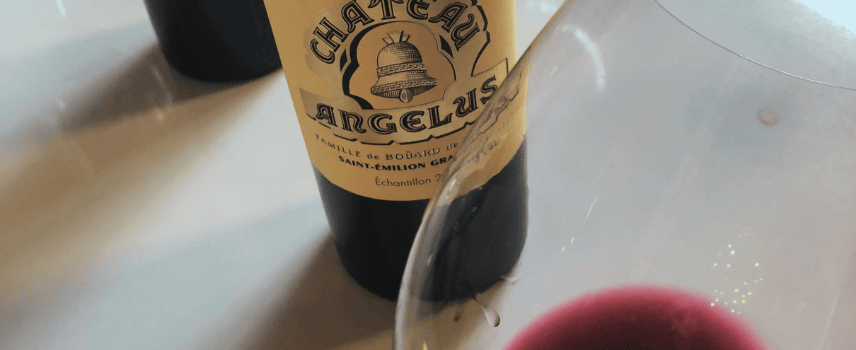
What stood out in Saint-Emilion and Pomerol was the higher percentage of Cabernet Franc used in the 2021 blend, typically with Merlot, as it is a late-ripening grape. Château Angelus’ 2021 Grand Vin contains the highest amount of Cabernet Franc on record: 60%. This gives the wine fantastic freshness and soft tannins. It was a similar story for many producers on the Right Bank, with higher levels of the grape used than usual. 

The Outlook for Bordeaux En Primeur 2021

While we eagerly await the release prices and critics’ scores that will appear during this quarter, the general opinion is that the 2021 vintage has produced fresh, approachable wines that are good quality. With yields down significantly in the case of some châteaux, we can expect there not to be as many bottles released as in previous years. Therefore it’s reasonable to expect that producers won’t be pricing these En Primeur wines at a discount. As always, it’s a question of individual châteaux prices.

Want to keep up-to-date on the Bordeaux 2021 En Primeur campaign? Sign up here to receive the latest news and releases.

Categories
News

Rare Burgundy Auction at Christie’s

Rare Burgundy wines are set to feature in Christie’s upcoming ‘Luxury Week’ in May and also in its Finest and Rarest Wines and Spirits sale in June. Spring heralds warmer weather, new growth and for one of the world’s most famous auction houses, a series of auctions that include some of the finest wines, watches, jewellery and handbags ever produced.

Christie’s Auction House 

Last year’s sales of luxury items at Christie’s was incredibly successful, topping just over $980m and the highest since 2015. Interestingly, 35% of buyers across all categories were new to the business and 32% of them were millennials, according to Christie’s CEO Guillaume Cerutti. It’s these new buyers that are driving the current buoyancy at the top end of the luxury auction market and that continue to push prices up on rare, collectible wines. What’s more, Christie’s has heavily invested in technology, a move brought about by the pandemic, in order to livestream auctions.  

All eyes will no doubt be focused on the upcoming rare Burgundy auction in June. It’s sure to be a real highlight as all of the 45 lots have been brought above ground from the deep, vaulted cellars of King’s College Cambridge. King’s College is said to have one of the most well respected cellars out of all of the university colleges and a real heritage when it comes to wine as its University Wine Society was founded in 1792. The college bought all of the wines on release from UK importer Richards-Walford and the cases were then moved to the university’s cellars, where they have remained since then. Only four wine stewards have been appointed in the past two centuries and their enviable role is to act as the cellar’s guardians and curate its collection.

A Wine Investor’s Dream

The 45 lots are set to feature rare Burgundies from such highly sought-after producers as Henri Jayer and his nephew Emmanuel Rouget, who is now the proprietor of some of Jayer’s most famous vineyards. Wines from these producers are expected to hail from such revered appellations as Echézeaux and Vosne-Romanée Cros Parantoux. Bids are sure to reach eye-wateringly high amounts for stand-out wines from a region that has tiny production levels.

Speaking about the upcoming auction, Adam Bilbey, Christie’s Global Head of the Wine and Spirits Department commented: “The hallowed cellars of King’s College, Cambridge are steeped in such history and tradition that this sale will garner the imagination and attention of wine lovers around the world. This small glimpse into the King’s College cellar will most certainly be a highlight of Christie’s wine sales this season”.

Want to find out more about rare Burgundy wine? Download our Burgundy report and discover why the region and its producers’ wines command some of the world’s highest prices.

Categories
Report

Q1 2022 | Report


Our first quarterly report, analysing the trends that shaped the fine wine market in the beginning of the year, is now available to download. The report examines how the global situation has impacted fine wine’s performance and the regions, producers and wines to follow.

The fine wine market was keenly poised at the beginning of the year after a record-breaking 2021. This helped it brave the volatility that traditional assets failed to withhold. Fine wine indices continued to rise despite slowing GDP growth, high inflation and the turmoil brought by Russia’s war with Ukraine. Burgundy, in particular, delivered a standout performance following a successful 2020 En Primeur campaign. Bordeaux continued to lose trade share to other regions, while California and – in particular – Champagne attracted a new wave of investment interest.

The start of the year was all about bubbles. Champagne did not only dominate the list of wines on the rise, but the region took four out of the five spots of the most traded wines this quarter. Louis Roederer’s Cristal itself filled three of these.

Judging by the first quarter, 2022 is set to be an exciting year, abound with opportunities for fine wine. The ever-decreasing supply of the most sought-after wines is pushing up prices but also leading to a market expansion, as buyers seek value and (re)discover regions, new and old. The perceived stability of fine wine is providing protection in an environment of rising costs and inflation and is bringing more investors to the most delectable of markets.

WineCap’s independent market analysis showcases the value of portfolio diversification and the stability offered by fine wine. Download our brand new quarterly report for your summary of the past quarter in fine wine.

Categories
News

The Champagne Brands Driving Price Growth

Champagne looks set to capitalise on its excellent 2021 performance. Last year was fantastic for Champagne brands as sales figures for the category rocketed beyond pre-pandemic levels. Over 350 million bottles were exported worldwide last year and the appetite for French bubbles – synonymous with luxury, indulgence and good times – gained the most ground in the US which has now surpassed the UK (37.4%) as the largest export market by volume (39.1%). 

This price growth can be attributed to two things: restaurants, nightclubs and bars reopening worldwide, as well as ultra high net worth collectors focusing their attention on the category. With less supply available, prices surged.

The sky was the limit for Champagne in 2021 as it ended the year up 40% and at a record high level. 2022 looks incredibly promising for the category too as it’s up 9.6% so far this year. 

Louis Roederer Cristal Rosé

Prestige Champagne brands were the key price drivers in 2021 and the headline acts with the top performance were highly sought-after names including Louis Roederer Cristal (with high demand across the 2008, 2012, 2013 and 2014 vintages). Interestingly, the most traded wine by value was the 99 point scoring Louis Roederer Cristal Rosé 2012 as the market for rosé Champagne expands. Other Grande Marques with top billing were the ultra-premium Salon (2007, 2006 and 2002 vintages), as well as Taittinger’s Comtes de Champagne 2006 and Dom Pérignon’s Rosé 2005.

Non-Vintage Champagne

However, it wasn’t just vintage Champagne that sparkled. The trade of non-vintage (NV) Champagne also broke new ground and made up the most-traded part of the category. The market has also broadened with NV Champagne’s trade share up from 5.1% in 2018 to 17.6% in 2021.

With such impressive performance in 2021 as well as in Q1 this year, there’s no doubt that Champagne has now cemented its place in the secondary market for fine wine. What’s more, there is no other region where the top wines are still this affordable. Savvy investors who hold top Champagne know just how approachable this category is, when compared to the most prestigious Burgundies, top Napa wines and the very best of Bordeaux.

Want to find out more about investing in Champagne? Read WineCap’s in-depth analysis in our Champagne Report.

Categories
News

Spring Frosts in Bordeaux

Bordeaux wine producers braced themselves this week as temperatures dropped as low as -7℃ in certain areas. It’s the second year in a row that the region has experienced Spring frosts and the coldest temperatures for this season since 1947. As châteaux try to ward off the frost that can wreak havoc on their entire crop, we’ve taken a closer look at how it impacts vines and what producers can do to try and combat it.

Frost and Wine: How Does it Affect Vines?

Spring frosts happen when cold air below 0℃ collects at ground level and freezes any water that has settled on surfaces. If this happens to new buds that have burst it kills them. The impact of this is huge and can impact the vintage yield significantly.

Vineyard Frost Protection

There are several ways that wine producers can try to combat frost in the vineyard. One popular and traditional method in French winemaking regions is the use of ‘bougies’, literally ‘candles’ in French, but more often ‘burners’, using old oil drums. They are placed throughout the vineyard to generate heat which helps the air to circulate and prevents the cold air from settling and causing the frost.

Wind machines are more common in areas that are prone to frosts. They act as large fans with a heating element inside and aim to keep the temperature at ground level above freezing. You might have even seen photos of some producers using helicopters above the vineyards in order to circulate the air!

Sprinklers are also used to spray water onto the vines. As the water freezes around the green tissue, it releases some heat which gives vines just enough protection to fight off the frost. 

One Bordeaux producer who has fought frost with 100% success using another method this year is Liber Pater in the Graves region on the Left Bank. Owner ​​Loic Pascquet no longer bottles his wines adhering to the AOC system which has strict production requirements. Instead, he chooses to bottle his wines as ‘Vin de France’ and is free to use frost nets in the vineyard, something that AOC classified producers are not permitted to do. Frost nets cost half the price of burners and are also reusable.

The Impact on the 2022 Vintage

While we don’t know just yet the full impact the Spring frosts may have had in Bordeaux, it’s likely that yields will be down. With less fruit available to make the wines, the amount of the 2022 vintage released on the market could be drastically reduced, meaning that the global demand for Bordeaux would struggle to be satisfied.


Categories
Learn Report

Burgundy | Regional Report

There is a maxim in the wine trade: no matter where a wine lover starts, they end up in Burgundy.

A key part of the attraction is in its contradictions: it is the most romantic wine region but also the most expensive; quality tends to be high but quantities are low; intuition is key but it is also one of the most researched regions.

With only two primary grape varieties and three classification ranks, Burgundy may appear simple, but with dozens of controlled places of origin (AOCs), hundreds of producers and thousands of wine labels, it can be incredibly complicated.

Our Burgundy Report delves into the fundamentals of this fascinating region, including the development of its investment market, historic performance, recent expansion and key players.

Discover more about:

  • Burgundy’s price performance
  • The expansion of Burgundy’s investment market
  • History of the Burgundy wine region
  • Burgundy’s structure and fragmentation
  • Key Burgundy producers
  • How we choose Burgundy for investment

Do not hesitate to get in touch and speak to one of our wine investment advisors for further information and to reserve your allocations.


Categories
Learn

The Fine Wine Market is Seeing More & More Investors


There is no question that appreciation of wine is increasing all over the world which, subsequently, has piqued the interest of potential fine wine investors across the globe.

The fine wine market has established itself as a low-risk marketplace for anyone looking to get into the investment world or wanting to expand their existing portfolio. But why is it so popular?

In this article, discover why more and more people are investing in fine wine and, if you’re considering becoming a fine wine investor yourself, find out how to get started.

Differences between fine wine and other investment methods


An alternative investment

An alternative investment is any way of growing your capital that doesn’t fit into the traditional categories, such as equity and bonds.

Alternative investments, such as fine wines, allow investors to diversify their investment portfolios. Doing so decreases the risk over their entire portfolio, giving them the chance to strengthen what they already have.

Low correlation with the stock market

The fine wine market doesn’t correlate with the stock markets because its value relies on the good old-fashioned supply and demand model.

Investment-grade wine producers only make a small amount of wine every year, this already increases its value. As soon as someone drinks that bottle of wine, there is one less bottle to buy, but the demand for that wine doesn’t go away.

This continuous cycle is what often gives fine wine investors such a healthy return on investment, unlike traditional investment methods where prices often rise and fall unexpectedly.

It’s a tangible asset

A tangible asset means it is a physical object. A fine wine investor invests in a real-life, physical product, which means they have direct ownership of that wine and can crack open and enjoy it should they wish to.

This differs to stocks and shares, where although you may receive paper confirmation, you don’t truly own the product – making it less secure than tangible assets.

Low volatility

Volatility is a term to describe the rate prices of an item increase and decrease in a market over a period of time.

Traditional investment methods, like stocks and bonds, have very high volatility. Prices can increase and decrease for any reason at any given time. Indeed, sometimes it only takes one prominent and influential figure to publicly criticise it for its price to dramatically drop.

The fine wine market has low volatility with stable price growth over time, which is why fine wine is considered a low-risk investment.

So, how can you turn fine wine into profit?

One of the many great things about fine wine investment is that you can take it up whether you are an investment expert, or a hobbyist looking to expand your portfolio.

If you are new to fine wine investment and would like some help deciding where to invest your money, you could look into working with a fine wine investment company like WineCap.

Here at WineCap, we offer expert, unbiased advice on strategic investment opportunities and can walk you through how to get the most out of your investment.

We also store your fine wine in government bonded warehouses, ensuring your wines are stored in optimum conditions.

Learn more about wine investment and schedule a free consultation today.

Categories
Learn

Investing in fine wine or in stocks – which is safer?

If you’re looking for viable investment opportunities then you’ve likely considered a range of potential investments, including stocks and wine. But of these two drastically different investment arenas, which is the safer option during the current economic climate?

In this article, discover the pros and cons of investing in wine and investing in stocks to help you make a more informed decision about which investment direction is best suited to you.

The pros of investing in wine


A lower-risk tangible investment

Fine wine is a physical product with intrinsic value. Unlike stocks – which are intangible and can theoretically fall to zero – fine wine always holds some market value because it is consumable.

Key reasons wine is considered lower-risk:

  • It is insured and professionally stored

  • It cannot suddenly become worthless

  • Supply is finite: once opened and consumed, bottles disappear

  • Historically lower volatility than equities

Fine wine is a physical asset, so it represents a very low-risk investment. When you invest in the market, your wines are stored in optimal conditions within a secure bonded warehouse.

Enjoyable, and globally recognised

Investment wine is both a luxury asset and a globally traded commodity. Its value is supported by long-term demand from:

  • Collectors

  • Restaurants and hospitality buyers

  • Private clients

  • Global auction houses

This creates a large, stable market for well-selected wines.

Strong historical performance

Fine wine has shown remarkably consistent returns over the past two decades. According to S&P Global, wine is one of the few luxury assets to have withstood the harsh impact on assets triggered by the coronavirus pandemic, proving the market relatively resilient. Indeed, wine is widely considered to be a ‘safe haven asset’. Moreover:

  • Fine wine delivered 13.6% annualised returns over 15 years

  • Many top regions have outperformed major stock market indices over the same period

This steady upward trend appeals to investors seeking long-term resilience rather than rapid, high-risk gains.

Attractive tax treatment (UK/Some markets)

In many cases, fine wine is exempt from Capital Gains Tax because it is often classified as a “wasting asset.” This makes returns more efficient compared to traditional taxable assets.

The cons of investing in wine


Portfolio valuation can be tricky

Unlike publicly traded equities:

  • Wine doesn’t have real-time pricing

  • Market activity is slower

  • Valuations depend on recent trades, availability, and provenance

Specialist platforms greatly improve transparency – but it’s still less instant than stock market data.

Choosing the right wines requires expertise

Not every bottle appreciates. Risks include:

  • Overpaying for highly popular but widely available labels

  • Selecting wines with limited long-term demand

  • Buying wines from weaker vintages

This is why many investors rely on professional advisory services.

Selling wine can take a while

Wine is a slower, more deliberate market. Selling may take:

  • Several days, for liquid, in-demand wines

  • Several weeks or months for niche or rare bottles

Investors should treat fine wine as a medium- to long-term asset, not a short-term liquidity tool.

The pros of investing in stocks


The potential for large cash gains

Stocks can appreciate rapidly due to:

  • Strong earnings

  • New product launches

  • Market expansion

  • Industry disruption

This makes equities well-suited for long-term wealth building.

Quick purchases and sales

Stocks can be:

  • Bought instantly

  • Sold instantly

  • Traded globally

  • Accessed 24/7 via digital platforms

This liquidity makes equities ideal for short-term or flexible investing.

Easy diversification

With thousands of companies across dozens of industries, investors can spread risk across:

  • Regions

  • Sectors

  • Growth styles

  • Market caps

They can also spread risk by investing in alternative assets like fine wine.

The cons of investing in stocks


An erratic, volatile marketplace

Stock prices are sensitive to:

  • Inflation and interest rates

  • Political events

  • Global crises

  • Corporate earnings

  • Market sentiment

Sharp daily swings make equities riskier than wine, especially for conservative investors.

Limited transparency

Public companies release information – but not everything is disclosed. Investors may lack visibility into:

  • Internal management issues

  • Supply-chain risks

  • True financial health

This information gap introduces uncertainty when selecting stocks.

Capital Gains Tax

Profits made on equities are typically taxable. Depending on your tax jurisdiction, this can significantly reduce real returns.

Fine wine often avoids this (again, depending on jurisdiction), which is a major reason many high-net-worth investors diversify into alternative assets.

Wine or stocks – which is the safer investment?

While stocks offer higher potential gains, they also carry higher volatility and can suffer significant short-term losses.

Fine wine, on the other hand:

  • Is less volatile

  • Has a strong track record of steady returns

  • Holds intrinsic value

  • Benefits from global luxury demand

  • Offers potential tax advantages

If stability is your priority – or if you are building a long-term, diversified portfolio – fine wine is generally considered the safer investment.

Talk to our wine investment experts

If you’d like personalised guidance or want to explore building a fine wine portfolio, schedule a free 30-minute consultation with one of our experts.

Schedule your free consultation

FAQs About Wine vs. Stock Investing

1. Is wine really a safer investment than stocks?

Wine is typically less volatile and has historically shown steadier growth. Stocks offer higher potential returns but also higher risk.

2. How long should I hold investment wine?

Most investors hold wine for 5–10+ years, allowing rarity, bottle consumption, and collector demand to increase value.

3. Can wine lose value?

Yes. Poor vintage reputation, market oversupply, or weak critic scores can influence prices. Expert guidance reduces this risk.

4. Do I need special storage for investment wine?

Yes – professional bonded storage ensures optimal temperature, humidity, provenance, and insurance.

5. Can wine outperform the stock market?

Historically, fine wine has outperformed several major stock indices over long periods due to steady compounding and low volatility.

6. Is wine a good hedge during recessions?

Often, yes. Fine wine has shown strong resilience during economic downturns and is widely seen as a safe-haven asset.

Categories
Report

Bordeaux 2020 | Vintage Report

Our Bordeaux En Primeur 2020 Report is available to download. Discover our wine investment experts thoughts on 2020, a vintage that has widely been heralded by prominent wine critics as excellent and the third in a row of top Bordeaux vintages. Find out which Bordeaux sub-regions and producers they feel delivered top class wines that are worth seeking out. 

As with the two vintages that preceded it, conditions in 2020 favoured producers with multiple plots of different soil types due to the abundance of both sunshine and rainfall. Right Bank clay soils were better able to retain water and thus sustain the vines. 

Although Bordeaux En Primeur 2020 is undoubtedly a fantastic vintage, investors are advised to be selective and search for relative value rather than being led solely by critics’ scores. 

Through careful study and data analysis, WineCap provides insight into the wines that we feel present both value and opportunity for capital growth. With our bespoke, industry-leading graph and analysis tools we have concluded that the wines selected in this report are attractive prospects and that any carefully built investment portfolio should consider 2020 Bordeaux.

Click the button below to download our Bordeaux En Primeur Report. Do not hesitate to get in touch and speak to one of our wine investment advisors to reserve your allocations.