Categories
News

James Suckling releases Bordeaux 2022 report

‘A new benchmark’

James Suckling has released his report on the Bordeaux 2022 vintage ahead of the upcoming En Primeur campaign. The critic claimed that in the 40 years he has tasted Bordeaux in-barrel, he had ‘never come across anything like the 2022 vintage’.

2022 will stay in memory as one of the hottest years on record, featuring severe droughts and heatwaves. Despite the challenges, Suckling suggested that 2022 ‘gives us hope that both man and nature can adapt to these circumstance and produce outstanding wines, both red and white’.

He further observed that dryness and heat no longer mean bold ripeness in the resultant wines. Most winemakers have prioritised freshness and lower alcohol, ‘picking their grapes at optimal ripeness, with this “al dente” fruit giving a crunchy and clean character to the wines, with fine yet structured tannins’.

Suckling found the young wines to be ‘dynamic and fascinating’ and noted that ‘there was high quality from top to bottom’ – a sign of a great vintage.

Top-scoring wines

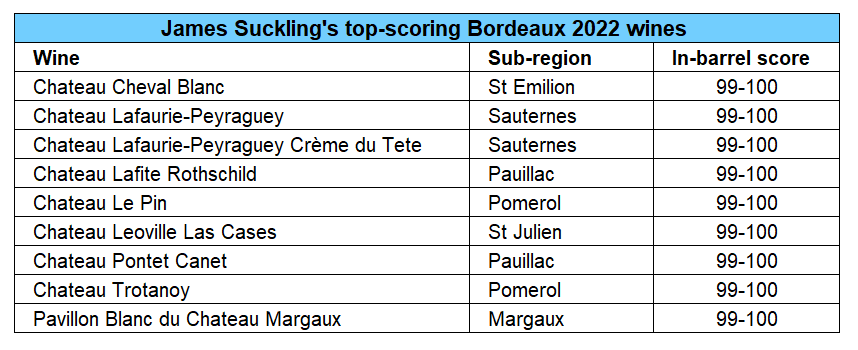
Suckling found nine candidates for perfection in Bordeaux 2022, awarding them a barrel range of 99-100 points.

Cheval Blanc stood out as his potential ‘wine of the vintage’, which ‘soars to new heights with its brightness and weightlessness’.

The critic was also full of praise for two Sauternes from Château Lafaurie-Peyraguey, calling the Crème du Tête ‘magical. The new 1929?’

Only one First Growth made the list, Château Lafite Rothschild, which Suckling described as ‘a classical Lafite that reminds me of something like the 1986 […] but it’s so today with its purity and precision’.

A white wine also featured among the top-scoring – Pavillon Blanc du Château Margaux. According to him, this ‘feels like a great Montrachet’ and is ‘one for the cellar’.

The question of pricing

Suckling’s verdict on the 2022 vintage is that the quality of the wines is ‘exceptional’ but ultimately ‘the market will decide’ the success of the new releases. ‘High interest rates, volatile stock prices and recent bank failures’ are some of the factors that will influence purchasing of young Bordeaux.

While the excitement of the new is guaranteed, high release prices might make older vintages look more attractive – especially if they offer value, and faster returns on investment.


WineCap’s independent market analysis showcases the value of portfolio diversification and the stability offered by investing in wine. Speak to one of our wine investment experts and start building your portfolio. Schedule your free consultation today.


Categories
News

US Buyer Acquires Bordeaux’s Château Lascombes

The US buyer whose recent purchase of Château Lascombes – that topped the list as the most expensive acquisition in the Médoc ever – has been revealed as Lawrence Family Wine Estates.

This is the US investor’s first acquisition in Bordeaux and, indeed, its first ever purchase in Europe. The family’s existing portfolio of brands include sought-after Napa names such as Heitz Cellars, Burgess and Stony Hill Vineyard.

While the full details of the sale haven’t been disclosed, it is a strategic and important one. Château Lascombes is a leading Second Growth located in the Margaux appellation. This top estate rubs shoulders with the four other leading Margaux châteaux including, Châteaux Rauzan-Ségla, Rauzan-Gassies, Brane Cantenac and Durfort-Vivens. What sets Lascombes apart is its size: the estate is the largest in the appellation and spans just over 110 hectares with an additional 10 hectares in neighbouring Haut-Médoc.

The French press reported the acquisition as the largest sole financial transaction in the Médoc’s history. However, what is interesting from the Lawrence Family Wine Estates’ press release is that, and there is little detail, a minority stake in Château Lascombes is to continue to be held by its previous owners, Mutuelle d’Assurance du Corps de Santé Français (MACSF)

Since its foundation in the 17th Century, the estate has changed hands a number of times. Most recently, in 2001, the USA’s Colony Capital bought it for $67 million and then sold it in 2011 to MACSF for an estimated €200 million.

Commenting on its recent acquisition, Gaylon Lawrence, owner of Lawrence Family Wine Estates’, said: ‘We are honoured to become the new stewards of such a historical estate. This Château has some of the greatest vineyards in Margaux and our family looks forward to caring for Château Lascombes for many generations to come’.

Currently, Lascombes represents great value when compared to other Second Growths. Its average price on Wine Track is £689, compared to Château Cos d’Estournel at £1,580, Château Montrose at £1,300 and Château Léoville las Cases at £1,980. Could this new purchase and the recent investment in new winemaking facilities be the beginning of a change in its price point, just like the ones we’ve seen in recent years at Châteaux Figeac and Canon?

Discover the other high profile acquisitions in the world of fine wine in our recent article

Categories
News

Bordeaux’s ‘Earliest Ever’ Harvest

Producers in Bordeaux welcomed the rain and cooler temperatures that arrived at the start of August with open arms. After six weeks of no rain, and with a prolonged heatwave, July of 2022 was announced as the driest on record since 1959.

The first white grapes of one of the key varietals that makes up the Bordeaux Blanc blend – Sauvignon Blanc – began arriving at wineries in the communes of Entre deux Mers, Graves and Pessac-Léognan from the 16th of August. The 2003 harvest that was previously considered very early, began on the 18th of August, making 2022 now the earliest ever vintage.       

The president of the Pessac-Léognan syndicate, Jacques Lurton, commented on this ‘earliest ever harvest,’ to French press agency AFP. He said that it was caused by ‘the exceptional conditions of the year that have speeded up ripening. Right now the aromatics are high in Sauvignon Blanc, making it the perfect moment to start bringing them in’.

Yields are expected to come in slightly under the 50-year average and are predicted to be between 13-21% higher than the 2021 harvest that was severely affected by frost. While there was a summer drought this year, both flowering and fruit set took place at the perfect time which meant that yields weren’t impacted too much.

The recent rain, up to 20mm in the majority of communes, has helped refresh soils and vines, as well as increasing the size of the grapes which are reportedly still some 30% smaller than usual.  

However, Bordeaux hasn’t been the only French wine region to have begun harvesting grapes early this year. The Rhône began on the 22nd of August: eight days earlier than last year. Roussillon also started picking grapes as early as the 3rd of August. Producers in both regions have expressed that, while the production levels may be down on average, they’re hopeful that great quality wines will be made.

Read more about the small but exceptional Port vintage expected in the Douro here.

Categories
News

3 Bordeaux Appellations Permitted to Irrigate Vines

In a year of drought, heatwaves and fires, producers in the three Bordeaux appellations of Pessac-Léognan, Pomerol and Saint-Émilion have been given special dispensation to water their vines. 

The lack of rain this year has been so pronounced that Météo France, the French national weather service, declared that July of 2022 was the driest on record since 1959. Irrigation is usually banned in the region from the 1st of May onwards. However, producers sent a request to the regulatory body, the Institut National de l’Origine et de la Qualité (INAO), which issued a derogation in light of the ‘extreme situation’ facing Bordeaux châteaux. Winegrowers are permitted to water their vines during times of persistent drought with permission and only if the drought ‘disrupts the good physiological development of the vine and ripening of the grapes.’ The vignerons were told by the INAO that their request was granted in this case but to use it when ‘only absolutely necessary’.

In Pomerol, the derogation states that producers must submit their proposals for irrigation two days ahead of any activity, along with the size of the vineyard area and grape varieties to be watered. Grapegrowers must also only use water from wells near the vineyard sites and not from the network.

The threat drought poses to vines, especially young vines, is hydric stress. This means that vines can’t get enough water to flourish and are unable to build up sufficient levels of sugars which delays ripening and harvest. Older vines have deeper roots which can draw water from further underground but vines aged between three to eight years old need the most attention.

The permission to irrigate vines is a much needed lifeline for wine producers this year who have had to deal with April frosts, the June hail storms, fires and a heatwave. With forest fires having started up again around Bordeaux, the region’s châteaux will be praying that the next few weeks bring cooler temperatures and long overdue rain.

Categories
News

Heatwave Provokes Bordeaux Fires

The UK recorded some of the highest temperatures on record at over 40°C on the 20th of July and fires broke out across England. For the WineCap team that was in Bordeaux at the time, it was an all too familiar scene.

France, like other countries on the continent, has endured sweltering temperatures in recent weeks. The combination of the mercury rising and the tinder-dry ground have provided the perfect conditions for forest fires which have ravaged large parts of South and South-West France since the 12th of July. Around Bordeaux, over 6,500 hectares have already been burnt in the Landiras commune and over 3,000 have been scorched in La Teste de Buch according to the Copernicus website.

While no vineyards have been directly affected yet, the fires have come too close for comfort for some producers. Loic Pasquet, owner of Liber Pater, based in the previously mentioned Landiras commune just North-West of Sauternes, revealed that a fire had come almost within 500m of his vines. Fortunately, it has now been fought back to 7km away.

Some 2,000 firemen and a combination of sea planes and water bombers have been battling the blazes in the region. This, combined with temperatures dropping from 41°C to ten degrees cooler, has provided a much needed respite and the forces are currently optimistic that they will be able to contain the fires unless circumstances change.        

Although Bordeaux has experienced large scale fires before – in 1949 and 1989 – none have been as severe as these. For wine lovers, the risk of fires and smoke taint affecting wineries and grapes is something that they’ll probably have read about most with California wines. In 2020, Napa’s ‘Glass Fire’ caused wineries Cain, Newton and Behrens Family on Spring Mountain to suffer complete losses.

It’s too early to tell in Bordeaux if smoke taint has affected grapes and therefore the 2022 vintage. Producers who think their vineyards may have come into contact with the smoke are being urged to take samples and perform tests. The mood in Bordeaux remains optimistic, but with the August and September months still to go before harvest, we’re sure many producers are keeping everything crossed.

Categories
News

Bordeaux En Primeur 2021: Initial Thoughts

The Bordeaux En Primeur 2021 campaign is set to begin this quarter. Critics and the wine trade have descended – in person this year – on the famous French wine region to taste samples of last year’s vintage which will be sold as new releases while the wines are still in barrel.

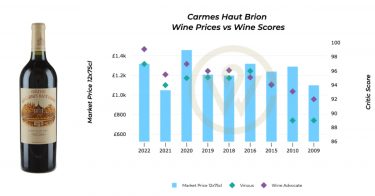
Performance isn’t just about how good a wine or a vintage is though, growth can be seen across the spectrum. For instance, Château Lafite Rothschild 2013 (Neal Martin, 90 points), is up 110% since release, Carmes Haut Brion 2012 (Antonio Galloni, 94 points) is up 160%.  Younger wines haven’t had the chance to move as far yet, but there are still good numbers to be found: Château Beychevelle 2017 is up 30% and Château Pontet-Canet 2019 45%

Initial Thoughts on the Bordeaux 2021 Vintage

After speaking with winemakers, the négociants who sell the wine, journalists and other members of the trade, the general opinion is that 2021 is a fresh and approachable vintage that’s good quality and that many remarked is similar to other cooler years. WineCap will make a full assessment of it once critics’ scores and release prices are out in the next quarter. 

2021 was a more challenging year than each of the three vintages that preceded it. January started off mild but with some heavy rain. Temperatures were cooler than normal which helped create wines with a fantastic freshness to them with lower alcohol levels. Many producers experienced frosts in April and May. However, some châteaux weren’t affected at all due to their terroir’s elevated topography, as is the case with Pomerol’s Troplong Mondot which had almost no loss of yield. Rain in mid August and September helped promote downy mildew in the vineyard which affected grapes, although this wasn’t a problem for all châteaux. Merlot was the most affected grape as it is an early ripener and is also the most prone to suffer from mildew. This meant that production levels were down, as rigorous sorting in the vineyard allowed only the finest grapes to be used. Many producers on both the Left and Right Bank held off harvesting until as late as possible in the hope of warmer weather to ripen grapes a final bit more. This paid off as those who waited were rewarded with sun and higher temperatures. 

New Technology Helping Create the Best Bordeaux Wines

Producers now have excellent technology at their disposal to help them identify and select the finest grapes possible. In 2021, many châteaux used optical sorting machines that have cameras and/or lasers to determine grapes’ colour, size, structure and chemical composition. Another technique that was employed last year and that is gaining more and more prominence is density sorting. Grapes are bathed in a sugar solution at a sweetness level the winemaker desires. Ripe grapes that meet the desired sugar level sink to the bottom. These methods are enabling winemakers to create fantastic wines even during a challenging vintage. 

Of course, while these machines are gaining more popularity, the hard work begins in the vineyard: taking care of the vines and hand sorting grapes there before further quality control can take place in the winery. Château Pontet-Canet in Pauillac is the posterboy for good vineyard management and – in particular – biodynamic practices as it retained most of its yield in 2021 as it was prepared for inclement weather.  

2021 appears to be continuing a trend of fresher wines that are approachable earlier, while still having the potential to be able to age for decades to come.

Left Bank Bordeaux

As with many of the Bordeaux wines we tasted regardless of appellation, the Left Bank producers were happy with their wines, despite not having been able to make as much of them as they’d like. Pessac-Léognan’s Château Haut-Bailly and Saint-Julien’s Château Beychevelle were textbook examples of the 2021 vintage, delivering fantastic freshness, purity of fruit and fine tannins.

Right Bank Bordeaux

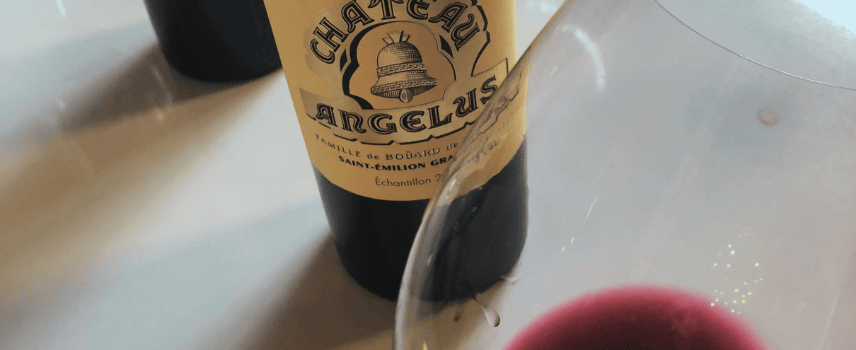
What stood out in Saint-Emilion and Pomerol was the higher percentage of Cabernet Franc used in the 2021 blend, typically with Merlot, as it is a late-ripening grape. Château Angelus’ 2021 Grand Vin contains the highest amount of Cabernet Franc on record: 60%. This gives the wine fantastic freshness and soft tannins. It was a similar story for many producers on the Right Bank, with higher levels of the grape used than usual. 

The Outlook for Bordeaux En Primeur 2021

While we eagerly await the release prices and critics’ scores that will appear during this quarter, the general opinion is that the 2021 vintage has produced fresh, approachable wines that are good quality. With yields down significantly in the case of some châteaux, we can expect there not to be as many bottles released as in previous years. Therefore it’s reasonable to expect that producers won’t be pricing these En Primeur wines at a discount. As always, it’s a question of individual châteaux prices.

Want to keep up-to-date on the Bordeaux 2021 En Primeur campaign? Sign up here to receive the latest news and releases.

Categories
Learn

Fine wine investment for beginners

Fine wine investment is rapidly gaining traction among beginners and novice investors looking to benefit from a reliable, alternative asset with real historical performance. As both a passion pursuit and a proven alternative investment, fine wine offers something few markets can: the ability to diversify an investment portfolio, strengthen long-term returns, and take part in a centuries-old tradition that continues to evolve.

Surging wine prices frequently make headlines, especially stories of collectors who bought extraordinary wines early, only to sell their wine years later through a wine auction or specialised platform for significant profit. But for newcomers, the key questions remain: How does investing in fine wine actually work? What returns can you expect? And how do you begin your journey in today’s fine wine markets?

This wine investment guide provides a complete introduction to the global wine market, how it operates, and what to look for as you start buying wine strategically.

How big is the wine investment market?

Investing in wine is not a new phenomenon. In fact, wine has functioned as a tradeable commodity since antiquity. Ancient Greeks, Egyptians, Phoenicians, and Romans circulated wine across renowned regions long before modern trade existed. One of the earliest recorded examples of wine prices appreciating appears in the writings of Thomas Jefferson. In 1787, he observed that the 1783 Bordeaux vintage commanded a premium over the younger 1786 vintage – a clear historical example of age and rarity influencing value.

Throughout the centuries, seasoned drinkers quietly practised what we now call wine investing, selling select bottles from their cellars as a way to subsidise consumption. The concept rested on a simple truth: as wine matures, scarcity increases – and so does its value.

Today, wine investment is more transparent, accessible, and data-driven than ever. The global wine market is forecast to reach US$525 billion by 2025, driven by growing international demand and a rising appreciation of luxury assets.

However, despite its size, only a small percentage of all wines produced worldwide are genuinely investment-worthy. Even in renowned regions like Bordeaux and Burgundy, most wines are made for drinking rather than appreciation. Only the rarest cult wines, top estates, and blue-chip producers have the characteristics required to deliver long-term returns.

This scarcity – of high-quality, investible wine – is the core driver of wine’s investment potential. Limited supply combined with global demand leads to price appreciation, particularly for wines with established reputations, critic recognition, and strong market trends.

More fine wine investment opportunities than ever before

Historically, Bordeaux’s classified growths dominated the fine wine investment landscape. In 2010, Bordeaux accounted for 96% of all global trade by value – a reflection of its scale, structure, and tradition.

Today, however, the market has expanded dramatically. Bordeaux now represents less than a third of trade as investors explore a broader set of regions offering compelling returns.

High-performing, investment-grade wines now come from:

Burgundy

Micro-production estates with global cult status and extraordinary long-term appreciation.

Champagne

Steady, consistent performers with strong brand equity—an ideal low-volatility segment.

The Rhône

Producers like Guigal’s La La wines (La Mouline, La Landonne, La Turque) provide both rarity and prestige.

Italy

Led by Tuscany and Piedmont, with wines like Sassicaia, Ornellaia, Masseto, Gaja, and Giacomo Conterno.

USA

Napa Valley’s cult wines – Screaming Eagle, Harlan, Opus One – offer exceptional long-term demand.

Germany, Spain, Australia

Smaller in volume but increasingly recognised for quality and collectability.

The growth of these renowned regions means that wine investment is no longer defined by one country or category. Investors can buy and sell wines across a far more diverse global landscape, tailoring their preferences to budget, style, risk appetite, and investment goals. The collectors’ market is booming, with record number of investible wines trading right now.

Greater fine wine investment returns

As global demand for investment-grade wines has expanded, so too have potential returns. Burgundy provides the clearest example: thanks to microscopic production levels and immense international demand, top estates have delivered some of the strongest returns in the entire luxury asset class.

  • Some Burgundy wines have risen 2,000% in 15 years.

  • The region’s major index is up ~200% over the last decade.

  • Trading volume, value, and liquidity have surged.

Champagne has also been a favourite for investors seeking steady gains. While it is not always the rarest category, its brand strength, vast global audience, and robust distribution networks deliver exceptionally consistent growth. It is often treated as a low-volatility safe-haven asset within a wine investment portfolio.

Different regions appreciate at different rates, influenced by:

  • critic scores

  • supply/demand dynamics

  • producer reputation

  • vintage quality

  • macro events (e.g., weather, tariffs, regional instability)

  • release price strategy

Understanding these factors helps investors set realistic expectations for both short- and long-term returns.

How long do I need to invest in fine wines for?

Fine wine is generally classed as a medium to long-term investment. As a rule of thumb, WineCap recommends holding wines for at least three years, though many investors choose a horizon of five to fifteen years.

Most collectible wines improve over 10–50 years, depending on region and vintage. As bottles are opened worldwide, scarcity increases, and prices usually rise.

External factors can accelerate returns. For example:

  • When Wine Spectator named Sassicaia 2015 its Wine of the Year, the price rose 25% in a single day.

  • Those who bought upon release have seen gains exceeding 160% to date.

Fine wine’s resilience also contributes to its appeal. Unlike the stock market, which can swing dramatically in short periods, fine wine typically shows low volatility and stable year-on-year growth. This is why many investors consider fine wine a safe-haven asset, particularly in periods of economic stress.

During Covid-19 disruptions and even after the geopolitical shocks following Russia’s invasion of Ukraine, fine wine indices outperformed the S&P 500, FTSE 100, and even gold.

How do I start investing in wine?

There are a lot of decisions you need to make when taking on wine investment. Wine investment experts like our team here at WineCap can help you make decisions relating to the following factors:

Set a wine investment strategy

The first step is to set your budget. Consider how long you would like to hold your wines for and your preferred investment strategy. Fine wines command a range of prices depending on the producer, how much of their wine is made and the wines’ age. Make sure to set your budget before embarking on building your portfolio so you can ensure you have exposure to all countries and regions.

Speak to a wine investment expert

There are different routes to accessing the wine investment market, such as through specialised retailers and auction houses. Expert wine investment brokers offer unbiased advice on strategic investment opportunities and can help you build your portfolio, based on your preferred length of investment and budget. While WineCap doesn’t charge any annual fees, most wine investment companies do, so be sure to do your research and be aware of any fees your portfolio might incur.

Select world-class wines for your portfolio

A wine investment expert will help you find the wines best suited for your investment portfolio. WineCap has formed long-lasting relationships over the past decade with négociants, wholesalers and private collectors. This means that we have access to some of the world’s most prized wines. What’s more, our unique proprietary technology analyses over 400,000 wine prices a day to identify the right, undervalued wines to buy and sell across the global market at the right time and price.

Store your wines professionally

Choose to keep your wines in government bonded warehouses as this will ensure they are professionally stored in temperature-controlled conditions best-suited for ageing wines. World-class care ensures that when you come to sell, your wines’ provenance will quickly secure maximum prices.

Final thoughts

Fine wine investment can feel daunting at first, but with the right strategy, guidance, and market insight, beginners can access one of the world’s best-performing luxury assets. With global demand growing, more fine wine investment opportunities emerging, and the market proving resilient through economic uncertainty, now is an excellent time to begin building an investment in wine.

Ready to get started now you know more about how to invest in wine? Speak to one of WineCap’s investment experts to discover the next steps on your wine journey.