Categories
News

The best-performing Bordeaux, Burgundy and Champagne wines of 2025

  • Even as Bordeaux, Burgundy and Champagne declined in 2025, select wines delivered double-digit gains.
  • Value, scarcity and specificity proved decisive as investors became more selective.
  • Early signs of market broadening suggest the correction phase may be nearing its end.

In our annual Fine Wine Report, published last week, we revealed the top-performing wines of 2025 – a diverse group spanning the Rhône, Burgundy, Tuscany and Sauternes. Some of these standout performers posted gains of over 65% in a year defined by prolonged market weakness, subdued sentiment and cautious capital allocation. But beyond these headline risers lies a subtler story.

In this final article of the year, we focus on the three most important fine wine regions globally by demand and liquidity: Bordeaux, Burgundy and Champagne. These regions were among the hardest hit during the downturn. Year-to-date, Bordeaux remains down 6.6%, Burgundy – 4.4%, and Champagne – 4.3%.

Yet within each of these regions, distinct pockets of resilience and growth have emerged. Individual wines not only stabilised but delivered meaningful appreciation, offering a clear view into how capital behaves at the tail end of a correction.

What follows is a closer look at the best-performing individual wine indices in Bordeaux, Burgundy and Champagne in 2025, and what they might reveal about the next phase of the fine wine market.

Key points

  • Regional averages mask significant dispersion at the individual wine level
  • Market downturns tend to reward selectivity rather than broad exposure
  • Outliers often signal early shifts in investor behaviour

Bordeaux investment: Value at the bottom of the cycle

Bordeaux, the most important region in fine wine by traded volume and global recognition, was also among the weakest performers in 2025. A muted En Primeur campaign, coupled with high stock levels and investor fatigue following several years of overpricing, placed sustained downward pressure on prices.

However, Bordeaux’s top performers tell a more nuanced story.

By mid-year, prices across the region appeared to find a floor. As the year progressed, demand selectively returned – first to wines offering clear value relative to quality, and later to brands that had fallen hardest during the correction.

Bordeaux top performing wines 2025

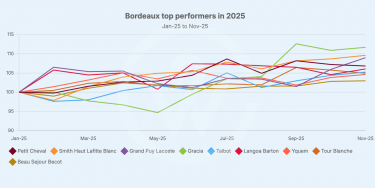
The top performing Bordeaux this year has been Château Gracia, rising 11.7%. The wine has an average price per case of just £881, underscoring the importance of value. The second best performer was Château Smith Haut Lafitte Blanc, up 9.6%. It was followed by Grand Puy Lacoste (9.0%), another relatively undervalued classically styled Pauillac, which saw an uptick in the last quarter. The wine has an average price per case of £589, and has enjoyed a 64% rise in the last decade.

In a market saturated with stock, prices only rise where quality is evident and upside remains. In 2025, investors increasingly favoured estates offering an avenue for growth. 

Key points

  • Lower entry prices improve downside protection in uncertain markets
  • Classic styles and strong track records continue to attract long-term capital
  • White Bordeaux is gaining relevance within diversified wine portfolios

Burgundy’s biggest risers: after the fall

Burgundy remains Bordeaux’s closest rival in market share terms, and one of the most volatile regions of the past decade. After dramatic price appreciation between 2019 and 2022, Burgundy was among the steepest fallers during the downturn, alongside Champagne.

In 2025, Burgundy declined 4.4% on average, but the performance dispersion within the region widened sharply.

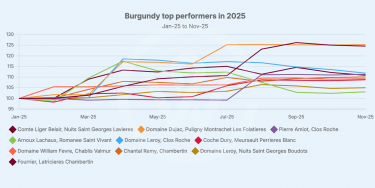
Burgundy top performing wines 2025

Dujac’s Puligny-Montrachet Les Folatières has been the best performing Burgundy this year, up 25.3%, closely followed by Comte Liger Belair, Nuits Saint Georges Lavieres, up 24.6%. The rest of the pack recorded more modest gains in comparison, between 5% and 11%.

After years of capital concentrating narrowly on the most famous Grand Crus, 2025 marked the beginning of a more discriminating phase for Burgundy investment.

Key points

  • Burgundy’s volatility reflects its scarcity-driven pricing structureCorrections tend to be sharper after periods of rapid appreciation
  • Relative value within elite producer ranges is increasingly important

Champagne: From tariff shock to broadening demand

Champagne’s trajectory in 2025 was shaped by external macro forces. The US tariff threat in March hit the region particularly hard, triggering a sharp dip in prices. However, clarity emerged by July, and with it a steady return of demand.

Year-to-date, Champagne has finished down 4.3%, but the region’s top performers tell a story of structural strength and evolving investor preferences.

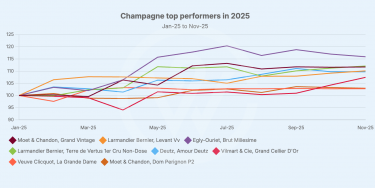
Champagne top performing wines 2025

The top performing wine from the region has been a grower Champagne; Egly-Ouriet has increased 15.9% so far this year. Scarcity, authenticity and critical acclaim have elevated top growers into an investment category once dominated exclusively by Grandes Marques.

Meanwhile, Larmandier-Bernier’s Terre de Vertus in second place, with a 12.0% rise, illustrates the appeal of singular wines: 100% Chardonnay, single terroir, single vintage, and priced well below prestige cuvées. Meanwhile, Moët’s Grand Vintage, up 11.7%, highlights that recognisable brands at accessible price points still command deep global demand.

Collectively, these performers reflect Champagne’s unique strength: a balance of brand familiarity, approachability and increasing diversity.

Key points

  • Brand recognition underpins long-term liquidity
  • Grower Champagne continues to gain institutional recognition
  • Accessible pricing supports both liquidity and diversification

Looking ahead: From narrowing to broadening

One of the defining themes in our annual report – and a key signal for 2026 – is the return of market broadening.

During periods of stress, demand narrows. Capital clusters around the safest names and most mature vintages, while secondary and emerging opportunities are overlooked. The past three years exemplified this dynamic.

The performance patterns seen in Bordeaux, Burgundy and Champagne in 2025 suggest that this phase is beginning to reverse. As volatility subsides and confidence returns, investors are once again willing to look beyond the obvious. The fog is lifting, and with it comes a clearer view of where the next opportunities may lie.

In fine wine, as in all long-term markets, recovery rarely announces itself loudly. It begins quietly – in the outliers.

WineCap’s independent market analysis showcases the value of portfolio diversification and the stability offered by investing in wine. Speak to one of our wine investment experts and start building your portfolio. Schedule your free consultation today.

Categories
Learn

A year in review: 2025’s top wine investment trends

In our final summary of the year, we look back at 2025’s top wine investment stories, from the impact of US tariffs on regional demand to market stabilisation and improvement in the second half of the year.  

Key themes:

WineCap’s round-up of 2025’s top stories presents a picture of a fine wine market that is showing signs of renewal following three years of downturn. Annual UK and US wealth reports reaffirmed fine wine’s growing position in diversified portfolios, despite tariff threats, restrained En Primeur activity, and uneven regional performance influencing sentiment. Early indicators of stabilisation in key regions and vibrant critic endorsement point to a transitioning market, laying foundations for fresh momentum.

UK and US wealth reports predict third-year rise in wine investing 

For the third year running, the year-start WineCap wealth outlook was positive. Predictions of rising demand for fine wine gradually bore out over an uncertain year. 

A combined 95% of wealth managers in the UK and the US said that fine wine would remain a top-performing collectible despite political uncertainty and shifting interest rates. Across both countries, fine wine was seen as one of the best alternative investments, outperforming other luxury assets such as art, watches, whiskey, and handbags.

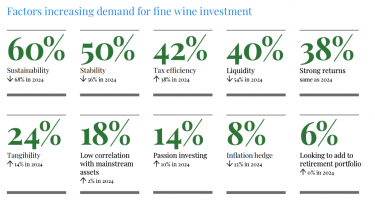
In the UK, the trend was driven by investors seeking tax efficiency, stability, and diversification benefits, with wine increasingly appearing in higher-risk portfolios and retirement planning.

Factors increasing demand for fine wine investment table

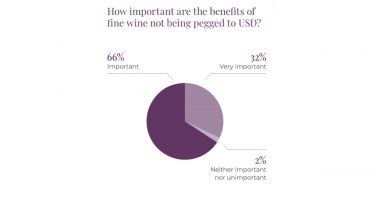
Meanwhile, in the US, the trajectory was similar, with protection from currency volatility an additional attraction of fine wine investment.


Benefits of fine wine investment pie chart

Wealth managers from both sides of the Atlantic noted that the proportion of younger, data-driven investors entering the market continues to rise, and an overall shift in fine wine evolving into a broader wealth-building strategy rather than a niche passion.

Key points

  • At the start of the year, 95% of UK and US wealth managers felt positive about fine wine investment.
  • Fine wine is appearing in higher-risk portfolios.
  • Fine wine is moving from specialist investment interest to mainstream strategy.

Trump tariffs bring uncertainty to fine wine market 

With Donald Trump’s return to the White House at the beginning of 2025, the new administration posited fresh economic policies, including the threat of 200% tariffs on alcohol from the EU. The announcement sent a chill through the fine wine market: buyers paused, demand slipped, and prices softened as investors temporarily redirected capital toward equities, property, and currency.

Yet alternative assets held firmer than expected. WineCap’s UK and US Wealth Reports showed that 58% and 74% of respondents respectively continued to view assets such as fine wine as attractive stores of value.

Stability returned in July 2025, when the US and EU agreed to a far more measured 15% tariff on European exports. With clarity restored, buyers re-entered the market – particularly in regions initially hit hardest, such as Champagne and Spain, which were among the first to rebound.

Key points

  • Trump’s EU alcohol tariff threat initially dampened market activity.
  • WineCap wealth reports indicate fine wine remains attractive regardless of the political climate.
  • Tariff consolidation in July saw US buying demand return, especially in the most impacted regions like Champagne and Spain.

Subdued Bordeaux 2024 En Primeur campaign

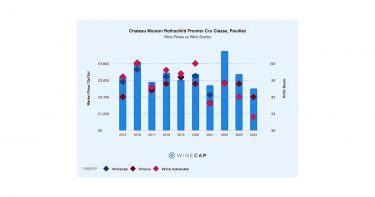
The annual Bordeaux En Primeur 2024 campaign launched towards the end of April against the background of a cautious market, triggering 20-30% price cuts in the leading French wine region in an attempt to increase demand. With Bordeaux’s global market share losing ground and a general correction in fine wine prices, discounting was a key driver of sales, over vintage (regarded as uneven) and brand. This approach increased access to rare-value opportunities in Bordeaux wine, most notably for First Growth estates, Lafite Rothschild and Mouton Rothschild. The 2024 vintage proved a strong year for white wines, with Haut-Brion and Domaine de Chevalier among the standouts.

Chateau Mouton Rothschild wine performance bar graph

Key points

  • Critics noted that Bordeaux 2024 was the perfect vintage for a reset. 
  • En Primeur demand was soft and price cuts were necessary.
  • First Growths Lafite and Mouton Rothschild were among the campaign’s biggest successes.

Early signs of stabilisation in Champagne and Italy

After two years of consistent declines, the fine wine market hinted at an early reversal in the second half of 2025, with Champagne being the first region to indicate a small upturn, in its first month-on-month gain in a year in June. With the majority of leading vintages of Champagne brands like Dom Pérignon, Cristal, Salon, Krug, and Taittinger flatlining for at least six months, a welcome phase of consolidation was indicated. 

Champagne’s strong recognisability, cellaring capacity, and relatively accessible entry points have positioned it well for a return to growth. Indeed, the region showing resilience throughout the second half of 2025. The Rhône also saw stronger demand, while “off” vintages in Bordeaux trended in a region that, alongside wine from Burgundy, showed signs of finding its bottom.

Momentum characterised the Italian fine wine market too, with the Tuscan region gaining traction as investors looked to Brunello and Super Tuscans like Sassicaia, Ornellaia, and Masseto. Performance for key Piedmont wines, however, remained softer. This was due to owing to investor preference for regions with wider international recognition and greater liquidity in the current economic climate. In California, global demand and strong branding fuelled rising interest for labels such as Opus One and Screaming Eagle.

Key points

  • Fine wine reversal indicated after two years of decline.
  • Champagne and Tuscany were the first to turn positive. 
  • Bordeaux “off” vintages stood out, while strong branding drove demand for Champagne and California’s cult wines.

La Place: strong global reach meets soft sentiment

In September, the 2025 La Place campaign continued its steady expansion beyond French Bordeaux wines with more than 130 labels also representing emblematic estates from Tuscany, California, Chile, Argentina, and Australia, released through the prestigious distribution network. This year’s campaign unfolded against a backdrop of economic ambiguity and a softer fine wine market environment. This naturally led to strategic price cuts. Overall, La Place 2025 underperformed, but this signalled a cautious stance in the market rather than decline.

Key points

  • La Place continued to reflect global quality.
  • Strategic price cuts were a key feature of this campaign.
  • Campaign lagged, but the reason was mostly tied to general market mood and macroeconomic factors. 

Record fine wine auctions in 2025

Against a backdrop of renewed regional stability in the fine wine market in the second half of the year, several record auctions hit the headlines. While multimillion-dollar sales from the likes of William I. Koch ($28.8mln) and Jacqueline (de Rothschild) Piatigorsky ($11.16 mln) displayed appetite for provenance and iconic vintages, they did not reflect the core secondary market. However, analytical investors could detect long-term demand for blue-chip wines and micro-trends in these auction results.

More reliable signals came from the 2025 Hospices de Beaune auction, which achieved €18.75 million, the third-highest total in its 166-year history. Robust bidding for top cuvées – notably the Bâtard-Montrachet Grand Cru “Cuvée Dames de Flandres” at €400,000 per barrel and the Pommard Premier Cru Les Rugiens President’s Barrel, also at €400,000 – confirmed the market’s persistent confidence in Burgundy terroir and mature premium whites. These results paralleled broader trends seen throughout the year with a decisive pivot towards established producers and investment-grade appellations.

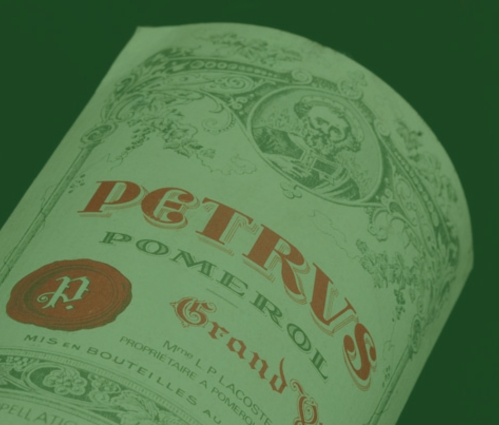
Nevertheless, headline auctions hint at fine wine market sentiment at the very top end like DRC and Petrus. They do not reflect the reality of the investment market as a whole. Auction headlines offer pointers to appetite for particular fine wine segments, but data-driven portfolios continue to cultivate the potential for sustainable returns.

Key points

  • Several record-setting fine wine auctions took place in 2025, including a landmark Hospices de Beaune sale.
  • Strong results confirmed appetite for established estates and iconic vintages, but did not reflect the broader market dynamics.
  • A diversified investment portfolio goes beyond the headline-grabbing names to good value alternatives with strong growth potential.

First positive gain for the fine wine market in Q3

The fine wine market started to stabilise in Q3 as global economic sentiment improved and the anticipation of steady rate cuts supported alternative assets. Regions that led this early-stage market equilibrium were Champagne, the Rhône, notably with Domaine du Vieux Télégraphe, Tuscany, famous Napa wineries in California, and First Growth Bordeaux.

In the final months of the year, these regions continued to show resilience. Scarcity, selectivity, and estate reputation drove returns. This phase is signalling a market that is bottoming out and poised for gradual recovery, offering attractive entry points for medium- to long-term investors.

Key points

  • Fine wine market stabilised in H2 2025.
  • Champagne, the Rhône, Tuscany, California, and Bordeaux showed resilience.
  • This laid the ground for positive market movement.

Bordeaux 2022 dominates critics’ top wine choices

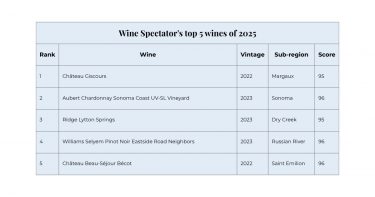
The year neared its end with the 2025 global critic rankings highlighting the fine wine market’s increased diversity. Top choices spanned with Bordeaux, California, Italy, South Africa, Etna, Central Otago, and Beaujolais. Bordeaux 2022 was the star region and vintage as Château Giscours, Château Beau-Séjour Bécot, and Château d’Issan earned top positions from Wine Spectator, Vinous, and James Suckling. The selection bolstered Bordeaux’s market significance despite the challenges the region has been facing. Alongside Bordeaux’s success, Italy and New World regions shone (particularly Californian cult labels and South African wine brands), pointing to a rise in quality across the wine world.

Wine Spectator's top 5 wines 2025

Key points

  • Annual critic ratings featured fine wine regional diversity.
  • Bordeaux 2022 was a leading choice across rankings.
  • Quality in New World wines indicated by the rising number of listings.

2025’s top-performing wines

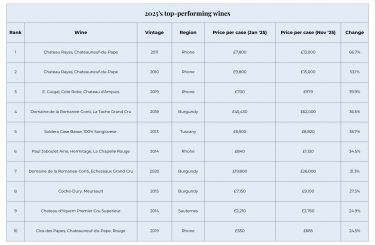
The strongest performers of 2025 were concentrated in a few key regions. The Rhône dominated with 50% of the top movers, followed by Burgundy (30%), Tuscany (10%), and Sauternes (10%). Château Rayas led the rankings, with two vintages taking the year’s top spots. Rayas prices have been particularly volatile following the passing of Emmanuel Reynaud in November. A similar market reaction occurred after the sudden death of Jacques Reynaud in 1997, whose tenure from 1978 cemented Rayas’ reputation as one of the Rhône’s modern icons.

Momentum extended across the Rhône more broadly. E. Guigal’s Cote Rotie Chateau d’Ampuis  2019 climbed 40%, while Paul Jaboulet Aîné’s Hermitage La Chapelle Rouge 2014 gained 35%.

In Burgundy, DRC La Tache 2018 emerged as the region’s standout, up nearly 37% over the year. Tuscany’s top performer was Soldera Casse Basse, which rose 36% and continues its long-term outperformance. Over the past decade, Soldera prices have risen an exceptional 224% – well ahead of the Super Tuscans.

2025 top-performing wines table

Key points

  • The Rhône dominates the list of 2025’s top-performing wines.
  • Château Rayas prices are rising sharply following the death of Emmanuel Reynaud.
  • Soldera Case Basse is Italy’s top performer of 2025 and continues to outperform the Super Tuscans over the long term.

Q4 2025: recovery precedes diversification 

By the final quarter of 2025, the fine wine market had begun to emerge from its most prolonged downturn in over a decade. The recovery remains uneven and cannot yet be described as a full rebound. However, underlying indicators suggest that the foundations for 2026 are firmer than at any point since the correction began.

Prices have stabilised, liquidity has improved, and several leading brands have now posted consistent monthly gains. Importantly, the early recovery has been measured rather than speculative, encouraging renewed participation from both private collectors and wealth managers.

Brand-level movements in late 2025 reinforced this early momentum. Many of the world’s most recognisable estates – across Bordeaux, Champagne, and the Rhône – posted modest but steady price increases, while over half of the most traded wines globally, finished November in the positive territory. A handful of standout performers, including top Bordeaux châteaux, iconic Rhône bottlings, and prestige cuvée Champagnes, delivered some of the strongest month-on-month rises seen all year. Not every segment moved uniformly: a number of cult California and Piedmont labels continued to ease back, underlining that different regions and vintages are still finding their floors at different times. The picture is stabilising, but it remains nuanced.

This complexity will define the transition into 2026. Investors should expect a market composed of multiple micro-cycles, where pricing floors and recovery curves vary by region, style, and vintage. 

Key points

  • Q4 2025 saw stabilising prices and improved liquidity after the longest downturn in over a decade.
  • Over half of the most actively traded wines posted gains in November 2025.
  • Recovery remains uneven, with different regions and vintages finding pricing floors at different times.

Looking ahead to 2026

Looking ahead, diversity is likely to shape the next stage of recovery. As fine wine continued to evolve from into a mainstream portfolio tool, investors will broaden their focus beyond the blue-chips. This shift is supported by the industry’s accelerated modernisation. Expanded global distribution networks, higher transparency, sustainability initiatives, and improved data access are making fine wine more accessible. The sector still faces an image challenge, but meaningful innovation is helping to reshape perceptions.

While a sharp, v-shaped upturn remains unlikely, the groundwork for a slow, sustainable and more widely distributed recovery is now in place. For medium- to long-term investors, 2026 is expected to offer clearer opportunities, improved sentiment, and a more diversified set of growth pathways than the volatile years immediately preceding it.

Key points

  • Broader diversification, stronger branding, and industry modernisation will shape 2026.
  • A steady, sustainable recovery is more likely than a rapid rebound, offering attractive entry points for investors.

FAQs

What were the biggest fine wine investment trends of 2025?
The major themes of 2025 included tariff-driven market volatility, followed by stabilisation in H2. 

Did the fine wine market recover in 2025?
The market began to show early recovery in Q2 and delivered its first positive quarter since 2022 in Q3. Stabilisation strengthened in the second half of the year, although the recovery remains uneven across regions.

Why was 2025 a turning point for the fine wine market?
2025 marked a shift from a three-year downturn to early signs of renewal. Prices stabilised, liquidity improved, younger investors increased their participation, and strong critic support helped reinforce confidence in key regions.

Are US tariffs likely to continue impacting fine wine prices in 2026?
Tariffs remain a key factor to watch, but the market proved resilient in 2025. Wealth managers in both the UK and US still view fine wine as a strong inflation-resistant and diversification asset.

Which wines performed best in 2025?
The Rhône led performance, accounting for around 50% of the year’s top movers, followed by Burgundy, Tuscany and Sauternes. 

Why did Château Rayas prices surge in 2025?
Prices were highly reactive to the passing of Emmanuel Reynaud in November. This echoed the sharp price movements seen after Jacques Reynaud’s sudden death in 1997.

Which regions are expected to lead the 2026 recovery?
Champagne, Tuscany, Napa Valley, the Rhône and top-tier Bordeaux appear to be the clearest candidates for early momentum.

WineCap’s independent market analysis showcases the value of portfolio diversification and the stability offered by investing in wine. Speak to one of our wine investment experts and start building your portfolio. Schedule your free consultation today.

Categories
News

Bordeaux 2022 leads critics’ top wines of 2025

  • Global critic lists show unprecedented diversity across regions and styles.
  • Bordeaux 2022 was in the spotlight across major publications.
  • Collectible wines and investment-grade wines differ – only some critic favourites have long-term market potential.

Each November, major critic publications around the world release their annual Top 100 wines of the year rankings. Rather than showcasing the wines only released in the past twelve months, the lists highlight standout bottles tasted throughout the year, spanning vintages, regions, and stylistic expressions.

A clear trend emerges from looking at past and current lists: increasing diversity. Critics are no longer focusing exclusively on tried-and-true regions like Bordeaux, Napa, or Barolo. Instead, their selections – this year spanning wines from Etna to Stellenbosch, Central Otago to Morgon – reflect the global expansion of fine wine quality, elevated vineyard management, and the growing maturity of the market.

Critic choices largely align with broader shifts seen in the fine wine investment landscape. As quality rises around the world, more wines now boast age-worthiness, critical acclaim, and technical precision. However, this raises an important point: not all critic-favourite wines carry investment potential.


A collectible wine may be rare, high-scoring, or culturally important, while an investment-grade wine must also demonstrate a proven secondary-market track record, liquidity, stable long-term demand, and price performance history.


Below, we explore three of the most influential 2025 global rankings and what the top wines reveal about the state of the fine wine market going into 2026.

Wine Spectator’s Wine of the Year

Wine Spectator’s annual Top 100 list is arguably the most commercially impactful ranking in the global wine calendar. Historically, the No. 1 Wine of the Year has triggered immediate surges in demand, and often dramatic price rises, across global markets. A clear example came in 2023, when Argiano Brunello di Montalcino 2018 – previously quiet on the secondary market – experienced a rapid uptick in both demand and value within days of receiving the top spot.

Wine Spectator's top 5 wines 2025

In 2025, the top position went to Château Giscours 2022, marking a major endorsement for Bordeaux’s strong 2022 vintage at a time when the region often finds itself facing criticism. Senior Editor James Molesworth explains: ‘Recent vintages have been mercurial in quality, while the region’s annual spring en primeur campaigns have fizzled. Tariffs haven’t helped. But if you needed a reminder that Bordeaux still makes some of the greatest wines in the world – and that its producers can evolve with changing times – the Château Giscours Margaux 2022 is your wine. This third-growth classified estate earns our top honor this year.’ 

Molesworth further highlights the wine as the culmination of decades of rebuilding work at the estate: ‘The efforts of Van Beek to surpass numerous obstacles over a generation is a clear example of how wine is a long game.’ The critic notes that recent improvements, including refined harvesting practices and guidance from consultant Thomas Duclos, have helped elevate quality, vintage after vintage. In 2022, these efforts culminated in a grand vin that Wine Spectator describes as fresh, seductive and finely detailed, with no second wine produced due to the exceptional quality of the harvest.

The rest of the top four represent a strong showing for California. Aubert’s UV-SL Chardonnay (No. 2) was praised as the union of ‘a renowned winemaker, a special vineyard and an exceptional vintage.’ Meanwhile, Ridge’s Lytton Springs 2023 and Williams Selyem’s Eastside Road Neighbors Pinot Noir 2023 reflect the continued strength and stylistic diversity of Californian wine across Dry Creek Valley and Russian River Valley.

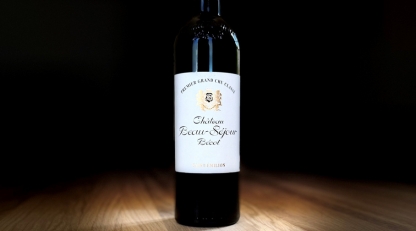
Rounding out the top five is another Bordeaux 2022 wine: Château Beau-Séjour Bécot. Wine Spectator calls it a ‘dreamy wine’, reinforcing the broader pattern seen across both critic and market attention this year. Bordeaux 2022 is clearly one of the defining narratives of the 2025 rankings, earning major positions across multiple publications.

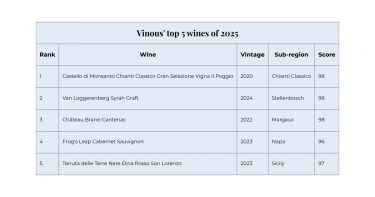
Vinous’ top 100 wines of 2025

Vinous’ annual list, which Antonio Galloni says aims to capture the ‘diversity and dynamism of today’s wine world,’ showcases wines of exceptional quality, character, and excitement rather than simply the highest-scoring bottles.

Vinous' top five wines 2025

This year, Italy takes the top spot with Monsanto’s Il Poggio, which Galloni calls “a total stunner” and “one of the very finest Il Poggios ever made.”

One of the most notable placements comes at No. 2: Van Loggerenberg’s “Graft” Syrah 2024 from South Africa. Neal Martin awarded it 98 points, praising its mineral character, balance, and crystalline finish – another sign of South Africa’s accelerating rise in fine wine quality.

The third wine in the list represents a more classical pick, but with a symbolic shift. With ownership passing to Henri Lurton’s children, Martin sees the 2022 Château Brane-Cantenac as a defining benchmark: ‘A year when… the 2022 is a benchmark for the Margaux estate, its future North Star.’

The list continues with strong representation from both New and Old World producers, including Frog’s Leap’s classically styled 2023 Cabernet Sauvignon and Tenuta delle Terre Nere’s deeply structured Etna Rosso San Lorenzo.

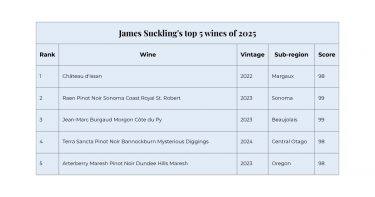
James Suckling’s favourite wines of 2025

James Suckling’s team tasted over 45,000 wines in the last year, making his Top 100 one of the most globally comprehensive. His selections prioritise balance and drinkability – wines that shine immediately, whether from bottle or barrel.

James Suckling's top five wines 2025

His top wine – Château d’Issan 2022 – reflects the broader dominance of Bordeaux’s 2022s across his list. Suckling emphasises that the vintage remains one of the biggest stories of the year, praising how the wines show focus, brightness and precision despite extreme heat and drought. He compares 2022 to other hot-vintage classics such as 1982, 1959, 1947 and 1928, all of which have stood the test of time, an important indicator for long-term growth. 

Suckling also notes how the accessibility of 2022 Bordeaux – widely released, easy to sample, and available across markets – enabled more comprehensive evaluation this year, contributing to their strong representation.

The remaining wines illustrate the global reach of modern fine wine quality. American Pinot Noir features prominently, with standout bottles from Raen and Arterberry Maresh. Meanwhile, two of the most surprising inclusions – Burgaud’s Morgon Côte du Py and Terra Sancta’s Bannockburn Pinot Noir – are also among the most affordable on the list, reinforcing Suckling’s point about the exceptional value emerging from Beaujolais and regions such as Central Otago. His report proposes that once-overlooked regions are now producing wines of extraordinary finesse and consistency.

Across all three critic rankings, a consistent narrative emerges: fine wine quality is more global, diverse and dynamic than ever before. At the same time, the spotlight on Bordeaux 2022 signals a vintage with both critical momentum and long-term relevance, firmly positioning it as one of the defining investment stories of the year.

Not every critically acclaimed wine is an investment wine, but the themes that surface – regional momentum, stylistic shifts, the performance of key vintages, and the critics’ influence on market behaviour – will all shape the fine wine landscape as we move into 2026.

WineCap’s independent market analysis showcases the value of portfolio diversification and the stability offered by investing in wine. Speak to one of our wine investment experts and start building your portfolio. Schedule your free consultation today

Categories
Learn

Wine auctions vs wine investing – which offers the best growth strategy?

  • Both auctions and portfolio approaches have a role to play in wine investment, but the latter is a more viable route to steady growth.
  • Auctions can provide useful signals, but investors should identify and avoid market noise and hype.
  • An expertly-managed portfolio focuses on growth, diversification, and liquidity over chasing auction trophy wines.

The wine world frequently makes headlines for astronomical prices at attention-catching auctions. Bottles can fetch sky-high sums as multimillion-dollar collections capture international interest. For investors, such record-breaking spectacles can appear to be proof of fine wine’s irresistible upwards trajectory.

However, glamorous and inspiring as they are, these auctions are not the market. They are the sharpest tip of it – distinct moments where scarcity, storytelling, and sentiment come together. A pristine bottle of Domaine de la Romanée-Conti or Château Pétrus with impeccable provenance might clear 20–50% above its estimate in a single-owner sale. While impressive, such outliers don’t speak of underlying market performance.

Understanding the difference between prices that make the news and the reality of the market is essential for any serious wine investor.

What ‘auction price’ really is

An auction price is more than meets the eye; it’s a composite shaped by multiple components. What does that sales figure really mean? 

Hammer vs all-in costs

The hammer price is the winning bid declared by the auctioneer – but that’s not the final price. The buyer then pays a buyer’s premium (10%–25%), plus taxes, shipping, and insurance. A bottle that hits the headlines at £100,000 could ultimately cost the buyer £120,000.

Single-owner vs mixed-owner sales

Provenance is all-important. Bottles from single-owner collections, especially with engaging stories and original documentation, often command premiums far above market average. In contrast, mixed-owner sales tend to be a more accurate mirror of demand.

Estimate bands and marketing psychology

Auction houses set low and high estimates to guide bidding – and to generate excitement. These figures act equally as marketing tools and predictive indicators. Only a lot that exceeds the high parameter of its estimate band hits the news; one that sells within its estimated range represents the quieter reality.

True liquidity

A record price for a single bottle does not automatically translate into similar highs for other lots. Headline-making hammer prices are outliers, influenced by rarity, media coverage, and competitive auction frenzy rather than a broader trend in the market. 

Wine auction record setters

The following are examples of headline-making auctions which illustrate the factors that drive remarkable performance: wine rarity, media frenzy, storytelling, and collector pedigree.

$34.5 mln – Henri Jayer, “The Heritage” (2018, Geneva)

  • Legendary producer’s last 855 bottles from private cellar.
  • 209 coveted magnums.
  • Rare Vosne-Romanée vintages.

$28.8 mln – William I. Koch, “The Great American Wine Collector” (2025, New York)

  • 750 large formats (Jeroboams, Methuselahs, Salmanazars).
  • Leading Bordeaux, Burgundy, Rhône, Napa, and Piedmont wines.
  • Single-owner collection.

$25.3 mln – Joseph Lau, “Iconic Wines” I–III (2022–2025, Hong Kong)

  • Rare Burgundy and Bordeaux.
  • Single-owner collection auctioned over three years created story.

$16.8 mln – Pierre Chen, “The Epicurean’s Atlas” (2023–2025, Hong Kong, Paris, Burgundy, New York)

  • Iconic Burgundy, Bordeaux, Champagne, and New World wines.
  • Legendary vintages.

$11.16 mln – Jacqueline Piatigorsky (2025, New York)

These auctions were hugely successful, but outcomes weren’t solely due to wine calibre. The unique auction environment also played a role. Such heady sums are not necessarily representative of wider market pricing.

What auctions can tell investors

While not presenting a definitive picture, auctions do generate a treasure trove of information. However, it’s important to follow results with a discerning eye because not all of the information is useful for a wine investor. You need to learn how to separate signal from media noise to understand the true meaning of auction prices.

Useful signals for investors

  • Provenance premiums: Illustrates how much collectors are willing to pay for documented bottles over generic lots. Formats, condition, and original packaging often contribute to worthwhile premiums.
  • Bidding depth: The number of bidders within the estimate band indicates genuine demand. Likewise, consistent competition across lots can point to authentic appetite that exists beyond the auction house.
  • Regional and vintage momentum: Repeated strong results across particular regions or vintages can signal emerging segments rather than one-off auction-driven prices.
  • Thin trading: The highest-profile bottles typically sell only once a decade. Such rare transactions can provide valuable insights into the wider market.

Limits and noise

  • Selection bias: “Survivorship bias” can distort average values. For a range of reasons, some wines survive the test of time while others don’t. Not every mature wine deserves high valuation.
  • Seasonality and venue effects: Marquee sales held in the spring and summer tend to attract more bidders and media coverage, inflating prices temporarily. The location of the auction can also impact results.
  • Story premium: Worth repeating is the character of the narrative surrounding an auction can elevate prices far beyond what would be achievable in normal market conditions. Celebrity collections, charity sales, and unique stories fall into this category.

Buying at auction

Auctions offer both opportunity and challenge for collectors and investors. Understanding their structure sets realistic expectations before bidding.

Pros

Cons

Building a wine investment portfolio with a trusted manager

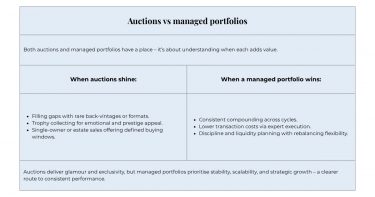
While auctions can offer wine performance insights, a structured, portfolio-driven approach is most optimal for serious investors. This method focuses on growth, diversification, and liquidity planning in response to the genuine market, rather than chasing one-off, high-performer auction house bottles. In short, headline bottles make news; diversified cases make portfolios.

Strategy-led

Discipline drives serious wine investment. A considered portfolio allocates across regions, producers, and vintages. Tiered maturity and style diversification help smooth returns and reduce volatility.

Execution

Acquiring wine at scale requires access to multiple channels: primary releases, négociant networks, ex-château allocations, and selective secondary market opportunities. Professional execution ensures consistent quality, provenance verification, and optimal pricing.

Expert oversight

A trusted manager maximises successful outcomes by safeguarding custody, insurance, and exit strategies, targeting holding periods and rebalancing, to shield investments from market swings.

Research & data

Continuous market monitoring is critical to disciplined investment. This data-driven strategy identifies trends and fair-value bands, so investors can avoid the pitfall of overpaying for hype and market noise.

Cost clarity

Unlike auctions, wine investment portfolio costs – custody, insurance, execution – are transparent upfront, allowing granular knowledge of charges for clear return comparisons.

fine wine auction summary table

Next steps

The fine wine world will always carry glamour, but serious investors should see auction headlines as stories, not signals. The real market for fine wine investment and value growth is built on data, liquidity, and expert execution rather than the excitement of ‘show-stopping’ headlines.

Key takeaways:

  • Don’t fixate on record breakers – they rarely mirror market performance.
  • Focus on repeatability and liquidity for sustainable returns.
  • Calculate all-in costs for true value comparison.
  • Diversify and plan exits through portfolio management for resilience.

Fine wine investment is guided by expertise, patience, data, and structure, separating steady compounding from the volatile environment of speculation.

WineCap’s independent market analysis showcases the value of portfolio diversification and the stability offered by investing in wine. Speak to one of our wine investment experts and start building your portfolio. Schedule your free consultation today.

Categories
Learn

How long should you hold your wine investment?

  • Fine wine investment differs significantly from traditional markets because supply diminishes with time.
  • Holding periods determine whether an investor benefits from liquidity windows, maturity or scarcity premiums.
  • Investors should not expect uniform results across all wines or timeframes.

When it comes to fine wine investment, most discussions focus on the what: which wines, which vintages, which regions. Equally critical, but less often addressed, is the when: how long you hold your investment.

Holding periods can dramatically shape your returns, mitigate risks, and define your overall strategy. Unlike equities or bonds, fine wine is both a physical asset and a cultural commodity, with unique cycles of demand and consumption. Understanding how time interacts with these cycles is essential for building a resilient portfolio.

Why holding periods matter in wine investment

Fine wine investment differs from traditional markets in one key respect: supply diminishes over time. Bottles are uncorked and consumed, which means that scarcity increases naturally as years pass. At the same time, the wines themselves evolve in bottle, often improving in complexity and desirability. This dual dynamic of shrinking availability and increasing quality drives long-term price appreciation.

However, investors cannot expect uniform results across all wines or timeframes. Some wines appreciate rapidly within a few years, while others demand decades of patience. Holding periods determine whether an investor benefits from:

  • Liquidity windows – when supply and demand align to create strong secondary market interest.
  • Maturity premiums – when wines are at or approaching their drinking peak.
  • Scarcity premiums – when older vintages are nearly impossible to source.

Short-term wine investment holds (1–3 years): Potential high gains?

Short-term holding in fine wine is less common but not without opportunity. Investors might target wines with clear catalysts for appreciation in the near future:

  • Critical acclaim: A 100-point score from leading critics such as Robert Parker, Neal Martin, or Antonio Galloni can trigger immediate demand.
  • Market cycles and estate events: Certain vintages or regions may benefit from renewed attention during En Primeur campaigns or La Place de Bordeaux releases. Similarly, external factors such as a change of ownership, the passing of a renowned winemaker, or a significant new investment in the estate can act as a catalyst. These events often lead to brand repositioning and higher release prices for new vintages, which in turn push up the value of older vintages as buyers seek relative value.
  • Macro-drivers: Currency fluctuations, tariff shifts or geopolitical events can create short-term arbitrage opportunities.

That said, short-term holds may carry higher volatility. Transaction costs – storage, insurance, brokerage fees – also eat more heavily into returns when compounded over only a few years. As a result, short-term trading tends to suit sophisticated investors with high market awareness rather than long-term collectors.

Medium-term wine investment holds (5–10 years): The sweet spot?

The medium-term horizon is often considered the sweet spot for many wine investors. This is when:

  • Wines mature: Many Bordeaux, Burgundy, and Champagne houses see optimal secondary market demand when their wines are 5–10 years post-vintage. At this stage, they have begun to show character but remain relatively youthful, making them appealing to both collectors and drinkers.
  • Supply drops: The first wave of consumption removes weaker hands from the market, while professional storage ensures the surviving bottles command a premium.
  • Liquidity is strong: Buyers – both private and institutional – seek wines that are ready-to-drink but still have substantial cellaring potential.

This period allows investors to capture meaningful appreciation without committing to decades of illiquidity. For many, the medium-term strategy provides a balance of growth potential and portfolio flexibility.

Long-term wine investment holds (10–20+ years): Scarcity and compounding value?

For truly iconic wines, long-term holding unlocks the greatest rewards. Scarcity compounds dramatically after 15–20 years, and mature bottles often become the centrepiece of collectors’ cellars. Wines that especially benefit from this approach include:

  • First Growth Bordeaux: Château Lafite, Latour, and Margaux often reach their full secondary market potential decades after release.
  • Grand Cru Burgundy: Producers like Domaine de la Romanée-Conti or Armand Rousseau are prized for aged expressions, which are scarce even at release.
  • Prestige Champagne: Top cuvées such as Krug or Salon are often held back by maisons themselves, releasing older vintages at a premium.

The trade-off is clear: long-term holding requires patience, optimal storage, and careful insurance. Illiquidity can become an issue if capital is needed suddenly. However, for investors with a multi-decade outlook, these holds can deliver extraordinary compounding returns – often well outperforming traditional assets.

Factors that impact value over time

Not all wines follow the same trajectory. Determining how long to hold depends on a mix of factors:

  1. Region and style
    • Bordeaux and Napa Cabernet: typically longer arcs, rewarding 10–20+ years.
    • Burgundy Pinot Noir: often peaks earlier (7–15 years), though the best can go much longer.
    • Champagne: prestige cuvées benefit from extended ageing, while non-vintage wines are less suited to investment.
  2. Producer reputation
    Iconic names command steady demand across all stages, while lesser-known producers may see sharper peaks tied to critical acclaim.
  3. Vintage quality
    Strong vintages (e.g., Bordeaux 2000, Champagne 2008) often sustain demand longer, while weaker vintages may peak quickly.
  4. Critic scores and re-releases
    A re-rating or late-release program can extend or shift the ideal holding window.
  5. Market conditions
    Global economic health, currency exchange rates, and tariffs can all affect when it’s most profitable to sell.

Risks of mistimed holding

Holding periods are not without risk. Selling too early can mean missing out on peak premiums. Selling too late risks encountering diminishing returns as wines pass their drinking window. Additionally, improper storage can compromise value, no matter the holding period. There are also liquidity risks: Even top wines may face temporary illiquidity in weak markets.
This is why professional portfolio management and exit planning are critical in fine wine investment.

Practical guidance for wine investors

  1. Diversify holding periods: Mix short, medium, and long-term positions across your portfolio. This smooths out returns and provides liquidity when needed.
  2. Match horizon to goals: If you expect to need capital in five years, avoid exclusively long-term wines.
  3. Work with data: Tools like Wine Track can help identify optimal exit windows by tracking price curves and critic sentiment.
  4. Reassess regularly: Market conditions evolve. A wine planned for long-term holding may benefit from earlier exit if demand spikes unexpectedly.

In fine wine investment, holding periods are the mechanism by which wine transforms from a consumable product into an appreciating asset. Short-term traders may profit from timing and market-driven gains, medium-term investors enjoy liquidity and strong demand, and long-term holders benefit from scarcity-driven premiums.

The best approach often combines all three, balancing risk and opportunity across different time horizons. With the right strategy, time becomes your most powerful ally – quietly compounding value as the bottles rest in the cellar.

WineCap’s independent market analysis showcases the value of portfolio diversification and the stability offered by investing in wine. Speak to one of our wine investment experts and start building your portfolio. Schedule your free consultation today.

Categories
Learn Report

Q3 2025 Fine Wine Report

In our Q3 summary of the fine wine market we look at how the global economic landscape is shaping investment strategies, the road to recovery in fine wine, and the best-performing regions and wines so far this year. Read on for more on Lafleur’s recent classification withdrawal, the autumn La Place de Bordeaux campaign, and other industry-defining trends.

Executive summary

  • Market backdrop strengthens: Global equities advanced in Q3 amid optimism for gradual rate cuts and corporate earnings. Improving sentiment and policy clarity provided a firmer foundation for alternative assets, including fine wine.
  • Fine wine stabilises: After two years of correction, the fine wine market showed early signs of recovery. The Liv-ex 100 posted its first quarterly gain since the downturn began.
  • Regional divergence narrows: Champagne, Rhône, and Italy led the quarter, while Bordeaux and Burgundy also showed improvements; evidence of a maturing market phase approaching equilibrium.
  • Selectivity drives returns: The best performing wines came from overlooked vintages, particularly Bordeaux 2013/2014, alongside Rhône’s consistent value names and global icons such as DRC and Screaming Eagle.
  • La Place campaign underwhelms: The autumn La Place de Bordeaux campaign failed to shift market momentum. Demand remained subdued as release prices offered limited value versus back vintages in most cases.
  • News – Lafleur withdraws from Pomerol AOC: In a significant development, Château Lafleur announced its withdrawal from the Pomerol AOC, citing the need for greater viticultural flexibility in response to climate change. We explore how this might affect its market performance.

The trends that shaped the fine wine market

Market optimism sets the stage for fine wine stability

Global markets rallied through Q3 2025, driven by renewed optimism over growth and the prospect of gradual rate cuts, even as inflation proved sticky. US equities extended record highs, powered by strong earnings and ongoing enthusiasm for AI-related sectors, while Europe delivered mixed results amid weak German data but resilience in France and the UK. Gold surged as investors sought safety from lingering geopolitical tensions and trade uncertainties linked to US tariff policy. Bond markets posted modest gains as central banks maintained a cautious stance. Overall, investor sentiment steadied following a turbulent first half, with risk appetite supported by policy optimism and improving economic data, creating a firmer backdrop for alternative assets, such as fine wine, heading into Q4.

Fine wine market starts to turn

Signs of stability continued to build across the fine wine market in Q3, reinforcing the gradual improvement noted in our Q2 Fine Wine Report. After two years of consistent decline, several regional indices turned positive over the quarter. Five of the Liv-ex regional indices rose in August and September, and for the first time in three years, the Liv-ex 50, which tracks the prices of the Bordeaux First Growths, experienced monthly growth.

Broader market measures also improved. The Liv-ex 100 rose 1.1% in September, and the bid:offer ratio – a key gauge of demand relative to supply – reached 0.70, its highest level since April 2023. This sustained rise suggests buyers are gradually re-entering the market, drawn by attractive pricing and renewed confidence following a prolonged correction. While it is too early to call a full recovery, these movements point to a maturing phase of the downturn where value-seeking activity replaces reactive selling. 

La Place autumn campaign fails to shift momentum

A key event of the third quarter every year is the La Place de Bordeaux autumn campaign, which saw the release of over 130 wines from around the globe in September. However, in 2025, the campaign did little to shift momentum. New releases that did not offer value in the context of back vintages available in the market largely fell short, and demand was tepid even for the traditionally most sought-after labels like Opus One, Masseto, Ornellaia, Solaia and Penfolds. Tariff uncertainty, oversupply and general market cautiousness were a structural drag. Unless prices and allocation discipline improve, the campaign is likely to continue to alienate buyers.

Mainstream markets lead Q3; fine wine re-emerges

Global equities posted solid gains in Q3, buoyed by growing optimism around prospective interest-rate cuts and resilient corporate earnings. While mainstream markets outpaced most alternatives, select segments of the alternative asset universe – particularly private credit and real assets – showed signs of resilience. Fine wine also staged a modest recovery.

The Liv-ex 100 Index, which tracks the performance of the most sought-after investment-grade wines, recorded its first quarterly gain since the market downturn began, rising 0.4% over the quarter. Losses in July and August were offset by a 1.1% rebound in September, signalling renewed confidence. The broader Liv-ex 1000 Index slipped 0.5% over Q3, though it, too, recovered 0.4% in September, suggesting stabilisation across a wider basket of fine wines.

Meanwhile, the First Growths Index – a barometer for Bordeaux’s top estates – rose 0.7% in September but remained 0.7% lower for the quarter overall, reflecting the uneven pace of recovery across regions and price tiers. Nonetheless, after several quarters of decline, Q3 marked a turning point where fine wine once again began to move in step with the broader risk-on sentiment seen in global markets.
Fine wine vs mainstream markets

Regional fine wine performance in Q3

Regional fine wine indices displayed a mixed picture in Q3, but the pace of decline eased, and several categories began to rise. The Liv-ex 1000 ended the quarter 0.6% lower, yet September brought a broad uptick across most regions – an encouraging sign after months of subdued activity.

Champagne held its ground best, maintaining near-flat performance over the quarter and retaining its position as one of the most resilient categories in 2025. The region benefited from increased demand from Asia and the US. The Rhone 100 also improved modestly, ending Q3 just above its Q2 level as buyers continued to favour regions offering relative value.

Italy (0.4%) and the Rest of the World 60 (0.3%) both saw small gains in Q3, hinting at early signs of renewed confidence beyond the traditional strongholds of Bordeaux and Burgundy, which fell in Q3.
Regional fine wine performance 2025

The Bordeaux 500 declined 1.7%, while the Bordeaux Legends 40 dipped just 0.6%, as mature Bordeaux continued to attract active buyers. However, of the six Bordeaux sub-indices, three went up in September – those measuring the performance of the First Growths, their Second Wines, and the top 100 wines from the Right Bank. Burgundy prices softened slightly, down 0.2%, but its top wines remained among the most robust performers since the 2022 peak.

The combination of improving sentiment, selective buying, and greater market stability suggests that regional fine wine prices may be nearing their floor, setting the stage for a more balanced close to 2025.

The best performing wines so far in 2025

Even in a broadly subdued market, 2025 has shown that fine wine remains a story of selectivity and scarcity. A handful of standout wines have delivered strong double-digit returns, proving that, even during correction phases, the right names and vintages can outperform significantly.

The spread between the top-performing fine wines (+18% on average) and the Liv-ex 1000’s broad decline year-to-date (around -4.7%) highlights exactly why selection is paramount.
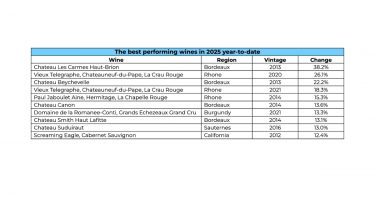
Best performing wines 2025 table

Three key themes stand out among the top-performing wines in 2025 year-to-date:

  • ‘Off’ vintage Bordeaux is back in vogue

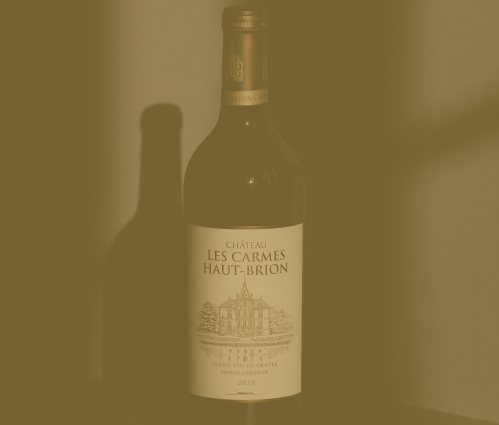
Wines from cooler or once-overlooked vintages – such as Bordeaux 2013 and 2014 – have led the pack. Collectors appear increasingly willing to reward finesse, drinkability, and scarcity over hype, with Château Les Carmes Haut-Brion (+38.2%) and Château Beychevelle (+22.2%) exemplifying this trend.


  • The Rhône’s value overdelivers

Rhône wines continued to prove their value credentials. Vieux Télégraphe’s 2020 and 2021 vintages and Jaboulet’s La Chapelle 2014 all posted impressive gains, driven by limited production, consistent critical endorsement, and comparatively attractive pricing.


  • Scarcity runs the market

At the very top end, scarcity remains the strongest currency. Domaine de la Romanée-Conti, and Screaming Eagle demonstrated that rare, blue-chip wines continue to attract capital regardless of broader sentiment.


Investors focusing on authenticity, producer pedigree, and under-appreciated vintages have outperformed the broader market, suggesting that quality and insight remain the keys to long-term success.

Q3 releases: Spotlight on Taittinger Comtes de Champagne 2014

Champagne has proven one of the most resilient categories in 2025, with the Champagne 50 Index outperforming most regional peers in Q3 (up 0.3%). The region is also enjoying renewed global demand as buyers take advantage of the attractive price levels post its 2022 peak. Within this steadying landscape, Champagne house Taittinger released the 2014 vintage of its Comtes de Champagne.

Awarded 97 points by both Yohan Castaing (The Wine Advocate) and Antonio Galloni (Vinous), it ranks among the highest-rated Comtes vintages ever – and Galloni notably compared it to the legendary 2008, which trades at a nearly 40% premium.

The 2014 release also carries historical significance. As the last truly cool-climate vintage in Champagne, it represents a stylistic milestone unlikely to be replicated amid the region’s ongoing warming trend – a factor that enhances its long-term collectability.

From an investment perspective, Comtes has been a quiet outperformer. The Taittinger Comtes de Champagne index has risen steadily over the past decade, outpacing both Dom Pérignon and Louis Roederer Cristal during the bull market of 2020–2023, and showing notable price stability throughout 2025.

‘Taittinger consistently stands out as one of the best values among top-tier Champagnes, frequently outperforming many other Grand Marques tête-de-cuvée offerings.’
– Yohan Castaing, The Wine Advocate
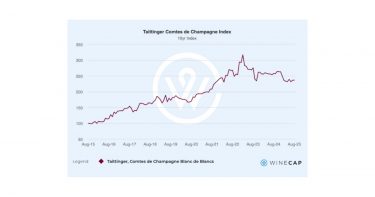
Taittinger Champagne index

Market snapshot

  • 2014 Release price: £1,190 per 12×75
  • Critic scores: 97 points (Vinous, The Wine Advocate)
  • Ranking: 62nd in the 2024 Liv-ex Power 100 (up nine places year-on-year)

With exceptional critic consensus, proven secondary market demand, and a price point that remains competitive, the 2014 Taittinger Comtes de Champagne exemplifies why the region continues to attract buyers, whether for enjoyment or investment. 

Q3 Fine wine news: Lafleur withdraws from Pomerol AOC

In August, Château Lafleur confirmed that from the 2025 vintage onward, its wines will no longer carry the Pomerol AOC designation, instead being labeled Vin de France. The decision extends across the Guinaudeau family’s portfolio, including Les Pensées, Les Perrières, and Grand Village.

The estate cited the need for greater viticultural flexibility in the face of accelerating climate change. In correspondence with trade partners, the Guinaudeau family wrote: ‘Climate is changing fast and hard… We must think, readapt, act.’ 

The withdrawal allows Lafleur to implement adaptive farming methods not currently authorised under the appellation’s 1936 regulations, such as controlled irrigation, soil covering to reduce evaporation, canopy shading, and adjusted planting density. 

Lafleur’s independence enables it to act without the procedural delays that constrain larger or corporate-owned estates. The move is consistent with its reputation for long-term thinking and precision farming, aligning vineyard practice more closely with environmental reality.

Market context

Historically, classification changes in Bordeaux have affected perception and pricing. The 2012 promotions of Pavie and Angélus within Saint-Émilion’s hierarchy, for instance, coincided with rapid market repricing, even though the wines themselves did not change. Lafleur’s withdrawal represents the opposite: the relinquishment of an appellation name rather than an elevation within it.
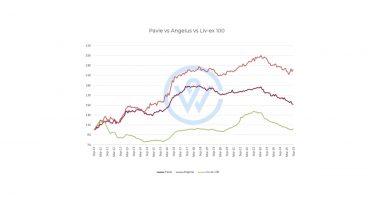
Pavie vs angelus wine performance

In the short term, pricing impact is likely to be neutral, as Lafleur’s identity and market position are defined by brand equity rather than by appellation. The château’s production is limited, its critical reputation exceptional, and its collector base highly stable. Over time, however, label differentiation could influence liquidity and buyer psychology, particularly between the final ‘Pomerol’ labelled vintages and the inaugural ‘Vin de France’ release, both of which may acquire added significance in secondary trading.

Performance and relative strength

Over the past decade, Lafleur’s secondary market performance has outpaced that of both the First Growths and its Right Bank peers, Pavie and Angélus. Despite the broader Bordeaux market correction since 2022, Lafleur has retained a significant premium, perhaps reflecting scarcity and confidence in the Guinaudeau family’s brand.
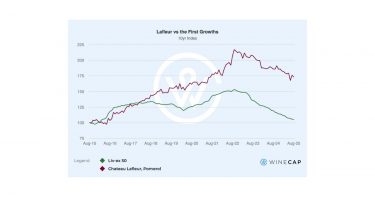
Lafleur fine wine performance

Should the transition to ‘Vin de France’ labelling prove commercially seamless, the move could even enhance Lafleur’s individuality, reinforcing its cult status as a technically driven, terroir-first estate. 

All in all, Lafleur’s withdrawal prompts a broader structural question for Bordeaux: how the appellation system adapts to climate change through balancing regional reputation with innovation arising from global-warming challenges. For Lafleur, the decision appears evolutionary rather than disruptive, designed to preserve vineyard resilience and wine quality in a shifting climate.

If Lafleur’s performance continues to mirror its past decade – where brand identity outweighed classification – this change may ultimately serve to strengthen, rather than dilute, its market position.

Q3 summary and a look ahead to Q4

The third quarter of 2025 marked a transition phase for the fine wine market. With mainstream assets recovering and investor sentiment stabilising, fine wine has begun to re-establish its footing after a protracted two-year downturn. Indicators such as the rising bid:offer ratio and renewed regional resilience point toward a more balanced market environment heading into Q4. Price declines have largely moderated, and value-seeking capital is returning, particularly to regions offering long-term quality at attractive entry points.

Looking ahead, the key drivers of performance will continue to be scarcity, selectivity, and producer reputation. Top estates with disciplined production, strong brand equity, and adaptability are well-positioned to outperform as the market moves toward recovery. As Q3 showed, the correction appears to have reached maturity; the next phase is likely to be characterised by gradual re-pricing, focused accumulation, and renewed confidence in fine wine as a stable, long-term asset.

WineCap’s independent market analysis showcases the value of portfolio diversification and the stability offered by investing in wine. Speak to one of our wine investment experts and start building your portfolio. Schedule your free consultation today.
Categories
Learn

The 2025 guide to investing in alternative assets

Alternative assets are investments outside traditional stocks and bonds. These can range from property, private credit and venture to collectibles such as fine wine, art, watches and classic cars. In 2025, fine wine stands out for its low correlation with equities, global demand, finite supply, strong brands, and the ability to build diversified portfolios from blue-chip regions such as Bordeaux, Burgundy, Tuscany, Piedmont, and Champagne. Success comes from rigorous selection, professional storage, long investment horizons (5-10+ years), and data-driven decision making.

What are alternative assets – and why they matter in 2025

Alternative assets cover three broad categories:

  • Collectibles: fine wine, whisky, art, classic cars, watches, rare coins.
  • Private markets: private equity & credit, venture capital, real estate, infrastructure.
  • Hedge strategies: market-neutral, macro, commodities, and other absolute-return approaches.

The Chartered Alternative Investment Analyst Association (CAIA) frames “alternatives” by their limited liquidity, pricing opacity, and non-traditional risk/return drivers compared with public markets.

Why diversification with alternative assets matters

Many alternatives move differently from listed equities and bonds, which means they can dampen portfolio swings when traditional markets are volatile.

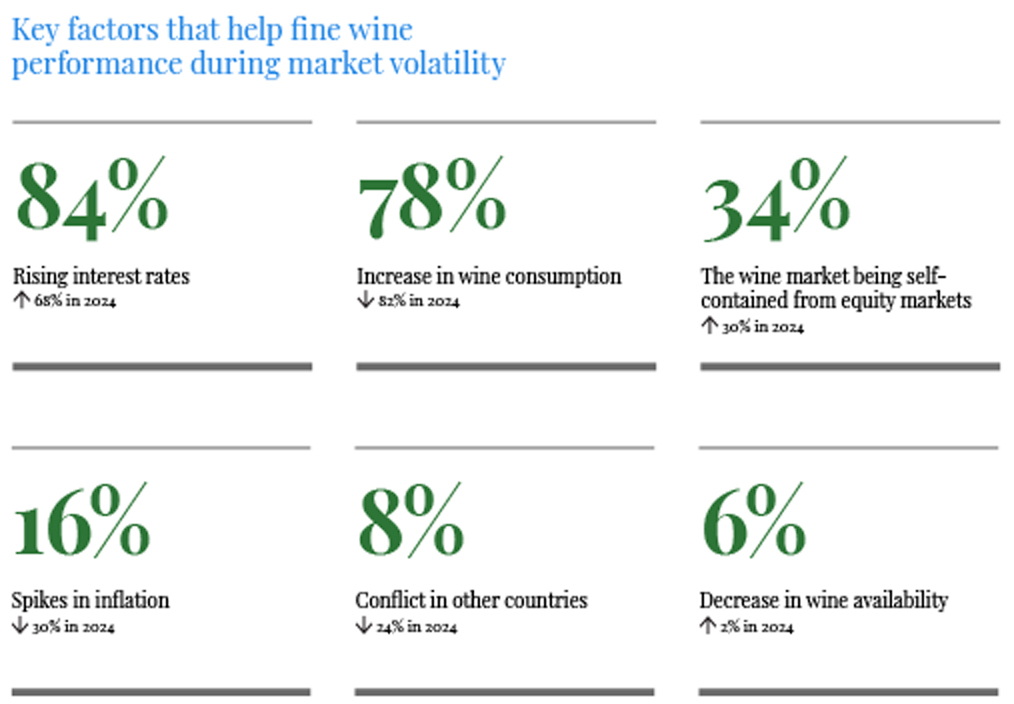
Fine wine is a strong example. Studies have shown it has low – and sometimes negative – correlation with equity markets, improving portfolio efficiency when included alongside traditional assets. In 2025, demand for fine wine has risen by 16% due to its independence from mainstream financial markets. Notably, 34% of UK wealth managers now cite wine’s self-contained nature as a key factor in its resilience during periods of market volatility, up from 30% in 2024.

Fine wine performance statistics

Hedge funds aim for the same goal: delivering returns that aren’t tied too closely to market cycles. In 2024-25, hedge fund results have varied across strategies, but overall performance has improved, highlighting their role as diversifiers rather than trackers of stock indices.

Alternative assets and inflation

One of the strongest advantages of alternative assets is their ability to preserve purchasing power when inflation erodes the value of money. Unlike fixed-income instruments, where interest payments may lag rising prices, many alternatives are underpinned by tangible scarcity and global demand, which supports value through inflationary cycles.

  • Private real assets such as infrastructure and opportunistic real estate have historically passed on rising costs more effectively than their listed counterparts, offering stronger inflation protection.
  • Collectibles benefit from their finite nature. The OIV reported 2024 global wine production at a near 60-year low, underlining how supply limits create pricing power. Fine wine is particularly resilient here: each bottle consumed makes the remaining stock rarer, while global demand ensures international relevance. Over time, well-stored vintages not only hold their value but often appreciate at a pace that outstrips inflation, similar to how gold is viewed as a store of value.
  • Art and luxury goods also serve as currency diversifiers. While the global art market saw values contract by 12% in 2024, activity levels remained robust, showing continued demand for tangible assets that trade across currencies and borders.

In effect, alternatives hedge inflation in ways traditional portfolios cannot. By anchoring value in scarcity, durability, and global liquidity, they help investors preserve real wealth.

Why timing and selection are important

Alternative assets do not present a uniform return stream, and fine wine illustrates this better than most. Outcomes differ dramatically depending on region, producer, vintage, and even release timing. Burgundy, for instance, can respond to very different dynamics than Bordeaux, while Champagne and Tuscany follow their own cycles. Within each region, a benchmark producer may hold value through downturns while lesser names fade.

Even within a single estate, the vintage effect is powerful: the release prices and the performance of First Growth Bordeaux shows a wide gap between celebrated vintages like 2000 or 2009 and those considered ‘off’ years. Variables like provenance and storage, widen the gap further. 

Just as in private equity or hedge funds, where manager selection drives returns, in the fine wine market, knowledge and timing are decisive. 

How liquid are alternative assets?

Liquidity in alternative assets differs from mainstream markets. Public equities and bonds trade daily on exchanges with instant settlement. By contrast, most alternatives – whether private funds or fine wine – take longer to change hands. A sale depends on finding a buyer, agreeing on price, and, in some cases, waiting for a trading window.

This slower pace can be advantageous. Investors willing to commit capital for longer are often rewarded with an extra return for patience. In fine wine, the best opportunities often come from holding rare vintages through periods of scarcity, then releasing them to market when demand peaks.

Access, however, is improving. Just as private credit has grown through evergreen and interval funds, fine wine platforms now make trading more efficient and transparent. Still, liquidity remains uneven: blue-chip Bordeaux or Burgundy may find a ready market, while niche producers or lesser vintages can take longer to sell.

The role of fine wine in 2025

Among alternative assets, fine wine stands out. In 2025, for the third year in a row, it came on top as the most in-demand collectible among financial advisors and wealth managers in both the UK and US. Fine wine is a viable alternative investment avenue for the following reasons: 

  • Scarcity meets demand: Production is both finite and shrinking, while rising global wealth continues to fuel steady demand.
  • Global and brand-driven: Iconic names such as Lafite Rothschild, DRC, and Salon are recognised worldwide and have a track record of delivering consistent value.
  • Diversifiable: Unlike art or cars, fine wine offers broad exposure across regions, producers, and vintages. With hundreds or thousands of cases produced each year, valuations are more transparent and portfolios easier to build.
  • Historically resilient: Fine wine has shown stability in market downturns and attractive long-term returns. Investors can track the performance of individual labels – or entire portfolios – directly through Wine Track.

In 2025, alternatives are no longer niche: they are central to how sophisticated investors diversify, preserve wealth, and seek differentiated returns. Fine wine brings together the key qualities that define successful alternatives: tangible scarcity, global demand, and return dispersion that rewards knowledge and timing.

Fine wine investment FAQs

Is fine wine a good hedge against inflation?
It can help preserve purchasing power over multi-year horizons due to finite supply and global demand, but outcomes vary. Diversify and keep realistic horizons.

How much do I need to start?
You can build a credible, diversified starter portfolio with a five-figure GBP budget; larger allocations allow more breadth and depth.

How long should I invest for?
Plan for 5-10+ years to capture ageing-related scarcity and demand. Tactical positions may realise sooner.

Where should I store wine?
In bonded, climate-controlled facilities with full insurance and documented chain of custody.

What returns should I expect?
Returns are not guaranteed. Focus on selection quality, costs, and disciplined process.

Categories
Learn

The best fine wines to invest in 2025

How to pick the best investment wines

The fine wine secondary market is still working through a correction that began in late 2022. Prices declined further throughout the first half of this year, with the Liv-ex 100 index down 5.2%. For investors, this means many blue-chip wines are available at levels not seen for years, yet careful selection matters more than ever. 

When choosing fine wines for investment in 2025, the following five criteria should be considered:

  1. Liquidity: depth of secondary market trading 
  2. Scarcity: limited production and strong back-vintage demand. 
  3. Proven vintage quality: critics’ consensus across strong years.
  4. Price momentum and entry point: assets that corrected to historically attractive bands.
  5. Fundamentals: brand power, distribution, and ageing potential.

These filters reflect a cautious market where ‘selectivity and scarcity’ are driving the handful of winners that still posted gains in H1 2025.

Best Bordeaux wines to invest in: value in maturity

Bordeaux’s share of global trade has shrunk over the past decade – from a once dominant force to now accounting for just over a third of the market by value. It’s also been one of the hardest-hit regions in terms of price performance during the recent downturn. On the surface, that may look like a negative but in reality, it has opened a window of opportunity for new buyers.

The recent correction has created compelling value in back vintages. The long-standing myth that ‘the best Bordeaux to invest in is always the latest release’ has been debunked by recent market behaviour and En Primeur campaigns. In 2025, many of the most sought-after Bordeaux wines for investment were not recent releases but mature, well-stored vintages offering proven quality, established critic scores, and immediate drinkability.

Even the 2024 En Primeur campaign underscored this shift in thinking: while release prices were often cut aggressively to stimulate demand, in many cases, comparable back vintages offered more value for money.

Where to focus

  • Classed growth Left Bank from strong years: First Growth prices have fallen with the market, but that’s precisely where patiently-awaited value emerges in proven vintages with long drinking windows.
  • High-momentum châteaux like Les Carmes Haut-Brion: its critical trajectory and scarcity keep it on many ‘accumulate on dips’ lists.
  • Second wines are mixed: prefer estates with consistent quality vs the Grand Vin and strong brand equity.

A cyclical downturn, steeper primary price cuts, and abundant back-vintage supply allow building positions in classic names at 2014-era equivalents.

Best Burgundy wines to invest in: buy selectively

Burgundy, which has fallen 5.8% year-to-date, remains one of the regions most affected by the broader market correction. After leading the charge in the 2020-2022 price surge, it’s now working off those highs, but that’s drawing in patient buyers. Liv-ex recently reported that their Burgundy 150’s bid:offer ratio is climbing as buyers take advantage of softer conditions. 

The best opportunities are in domaines with transparent distribution, consistent critic backing, and production levels that support liquidity. The aim isn’t to chase the rarest unicorns with the widest spreads, but to target ageworthy Premiers and Grands Cru wines from established producers – especially where pricing has stabilised.

Where to focus

Tip: Our full list of best-performing Burgundies is updated live on Wine Track – use it to cross-check performance momentum against your shortlist before committing capital.

Best Italian wines to invest in 2025: Super Tuscans and Piedmont

Italy’s indices have been more resilient than much of the market since 2023, with the Italy 100 showing a ‘tale of two cities’ – some weakness, but better relative performance than Burgundy and Bordeaux in the drawdown. Price discipline at release and broadening global demand help.

Where to focus

For diversification within Italy, combining steady Super Tuscan exposure with carefully chosen Piedmont parcels can balance liquidity with potential upside.

Best Champagnes to invest in 2025: stabilisation & early upside

Champagne combines brand prestige with broad global demand, strong critical reputations, and genuine scarcity in top vintages. After more than a year of declines, Champagne’s investment market is showing its first signs of recovery. In June 2025, the Liv-ex Champagne 50 posted its first monthly gain in twelve months, rising 0.8%. 

Individual brand performances are another encouraging sign. Across 50 flagship vintages from Dom Pérignon, Cristal, Salon, Krug, and Taittinger Comtes, over 85% have halted their price declines, with most holding steady for at least six months, reaching a classic consolidation phase. 

Moreover, demand is back on the rise. Champagne’s market share on Liv-ex has climbed to 12.4% year-to-date, above 2024’s average.

With prices now at more attractive entry points, this could be the first major fine wine region to re-enter growth mode, potentially ahead of Bordeaux, Burgundy, and Italy in the recovery cycle.

Where to focus

For investors seeking diversification with cyclical upside, the signs suggest Champagne may soon be popping again.

Best California wines to invest in 2025: pound strength opportunity

Sterling’s strength against the US dollar – at near decade highs – has combined with an 11.4% year-on-year price decline in Californian fine wine to create one of the most attractive buying climates in recent memory for European investors. 

Market leaders such as Screaming Eagle, Dominus and Opus One offer strong recovery potential, relative scarcity and top quality. Screaming Eagle’s long-term track record is particularly impressive, with six 100-point vintages in just 13 releases, and index growth of over 200% in the last two decades.

Where to focus

  • Icons at cyclical lows: Screaming Eagle 2021, Opus One, and Dominus for recovery-driven gains.
  • High-growth, small-production labels: Bond Melbury and Screaming Eagle The Flight, combining scarcity with recent strong momentum.
  • Diversification beyond Cabernet: Aubert Chardonnay and Occidental Pinot Noir for breadth and reduced volatility in US exposure.

With pricing, currency, and availability aligning, California offers a unique short-term window to secure both blue-chip icons and emerging stars at levels not seen in years.

Best investment vintages: quick compass in 2025

2005 (Bordeaux & beyond):
Now entering a glorious drinking window for Left Bank and Right Bank; quality is broadly exceptional with structure to age. Availability exists across the spectrum, often at meaningful discounts to 2022 highs. Great for ‘drink or hold’ strategies.

2009 (Bordeaux):
Riper, glamorous wines with huge critical appeal. Prices inflated in prior cycles, but the correction has pruned excess. Choose château by château; prime cellaring histories command premiums, but fair value has returned for top Left Bank and Right Bank bottlings. 

2016 (Bordeaux + Italy):
Among the most investable ‘modern classics’. Left Bank 2016 remains a reference point for balance, precision, and longevity; Tuscany 2016 (including Bolgheri) also shines. If you want one core vintage anchor for Bordeaux exposure in 2025, 2016 is the workhorse – especially as prices have softened. 

2020 (Burgundy + Tuscany + select Bordeaux):
A high-quality, warm year with strong critic support in many regions. In Burgundy, 2020 reds can be concentrated yet poised; in Tuscany, 2020 offers ripe, polished profiles for Ornellaia and peers. Corrections since 2023 have made select Bordeaux 2020s attractive relative to peak price points. 

En Primeur 2024 (context for new allocations):
Not a ‘vintage to chase at any price’, but the pricing is the story: releases down roughly 30% from 2023 at top estates, in several cases the lowest since 2014. If you buy En Primeur in 2025, do it for value vs readily available back vintages and only for estates with a clear historical discount at release.

Producers to watch in 2025

  • Les Carmes Haut-Brion combines small volumes, soaring critical trajectories, and a style that has captivated collectors. Pricing cooled with the market – use corrections to build modest positions with strict provenance.
  • Piedmont rarities with widening global followings, like Roagna’s single-vineyard Barbarescos and Barolos and Bartolo Mascarello. Watch for select back vintage offers post-correction.
  • Bolgheri peers beyond the ‘Big Three’ such as Le Macchiole Paleo and La Messorio, Tua Rita Redigaffi, and Soldera.
  • Select white Burgundy domaines with stronger availability (e.g. PYCM, Leflaive, Dauvissat). There is renewed interest in mature whites amid the broader correction.

Fine wine market 2025: why timing matters

Several data points contextualise 2025 positioning:

  • Market performance: Liv-ex’s broad Fine Wine 1000 is down 10.1% over one year and 20.9% over two years, illustrating the size of the reset. H1 2025 specifically saw the Fine Wine 100 fall roughly 4.4%, below the trade’s own start-of-year expectations.
  • Investor demand: Our primary research among wealth managers in both the UK and US showed they expect fine wine demand to rise this year – the highest expectation across luxury assets – despite the price falls. That tells you professional allocators are eyeing the dip.
  • Trade news: Quarterly round-ups from the wine trade echo the general market softness, highlight pockets of strength and cross-asset diversification appeal.

How to invest in fine wine in 2025

  1. Favour maturity or proven classics over speculative juveniles. The 2024-2025 buyer trend is toward ready-to-drink, mature vintages at corrected prices; that’s often the cleanest risk-adjusted exposure right now.
  2. Cross-check new releases vs back vintages for value. If the new release isn’t clearly cheaper than equal-or-better scored back vintages, skip it.
  3. Diversify by region and producer style. Italy’s relative resilience helps balance Burgundy/Bordeaux cyclicality; include Champagne/Rhône sleeves if your strategy allows.

Key takeaway: best fine wines to invest in 2025

2025 remains a buyers’ market. Liquidity is uneven, but the combination of cheaper Bordeaux, normalised Burgundy, and resilient Super Tuscans offers a compelling entry point. The market correction is still visible in the broader benchmark indices, but the best names at the right vintages and prices are being quietly accumulated again.

View our full Fine Wine Investment Guide

FAQs: Fine wine investment in 2025

1) Is fine wine a good investment in 2025?
Yes. 2025 remains a buyer’s market after a multi-year correction. Returns will be driven by selectivity (region/producer/vintage), provenance, and a longer holding period rather than quick flips.

2) Which regions offer the best value right now?
Bordeaux (mature back vintages), Burgundy (disciplined buys; mature whites and select 2019–2020 reds), Italy (Super Tuscans with steady liquidity), Champagne (early stabilisation), and California (GBP strength vs USD creating entry points).

3) How long should I hold investment wine?
Plan for 5-10+ years. Liquidity varies, but blue-chip Bordeaux can require 10-20 years to peak; Super Tuscans and Champagne often realise value earlier. Shorter holds increase friction and pricing risk.

4) What’s the minimum budget to start?
Practically, £5k-£25k builds a diversified starter portfolio. 

5) En Primeur or back vintages – which is better in 2025?
Often back vintages: you avoid waiting, see real critic consensus, and can compare prices like-for-like. Buy En Primeur only when the release clearly beats equivalent back vintages.

6) How important is provenance and storage?
Critical. Favour in-bond stock, original cases, full paper trails, professional storage, and inspection photos. 

7) How do currency and tariffs affect returns?
FX can add or subtract several percentage points. Tariff and duty regimes differ by route and change over time.

8) How do I manage liquidity?
Diversify across regions and styles and buy wines with established secondary market depth.