Categories
News

Bordeaux En Primeur 2024: critic scores and best releases

  • There have been some notable releases in a quieter En Primeur campaign. 
  • All of the top releases have represented the best entry point into their respective brands in the last decade. 
  • Critics have emphasised selectivity in a challenging vintage.

One month in since the start of the Bordeaux 2024 En Primeur campaign, which seems to be nearing its end, we look at critic scores and price trends to evaluate the best releases.

What the critics are saying

After the Wine Advocate’s William Kelley called Bordeaux 2024 ‘the weakest vintage of the last decade’, other critics have echoed his concerns with greater nuance. 

For Jane Anson, ‘the vintage was better than expected […] and clearly better than, for example, 2013 – and 2021 in the best cases.’

Meanwhile, Antonio Galloni (Vinous) observed: ‘The 2024s are all over the place in terms of quality and style, so readers will have to be selective. Within that context, the very best wines have a lot to offer.’ His ‘magnificent eight’ were Beychevelle, Clos Puy Arnaud, Cos d’Estournel, Jean Faure, Larcis Ducasse, Lascombes, La Conseillante and Rauzan-Ségla.

Neal Martin concluded his report, arguing that 2024 is ‘the ideal vintage for a reset’. He noted that ‘given the obstacles placed along the growing season, any 2024 that scores above 90 points is a success’. Martin’s highest barrel range was 96-98 points for La Mission Haut-Brion Blanc. Among the reds, his top wines with 95-97 points were Lafite Rothschild, Trotanoy, Lafleur and Vieux Château Certan.

The state of the market

As Bordeaux continues to lose market share to other regions, and fine wine prices overall are in a correction phase, releasing En Primeur has only worked with heavy discounts. We spoke with leading producers on how they determine their release prices, with strategies ranging from consulting négociants  and importers, and weighing in volumes and vintage quality. 

In his report, Martin speaks of the following reality: ‘There is no saviour riding over the horizon, no emerging country of insatiable Bordeaux-lovers, all against a backdrop of a vine-pull scheme […] and the fact that Bordeaux is wrestling with an image crisis.’ 

The solution? He goes back to the beginning of his career, when ‘off-vintages in the mould of 2024 would be discounted, and […] nobody lost face, including the grandest châteaux, and crucially, it kept the primeur system flowing, bottles passing through the distribution chain to the all-important final consumer’.

Within this context, we look at the releases that have worked so far – where pricing has aligned with trade and consumer expectations, and has offered a window for long-term profitability. 

Best En Primeur releases to date

One of the standout releases of the campaign has been First Growth Château Lafite Rothschild.

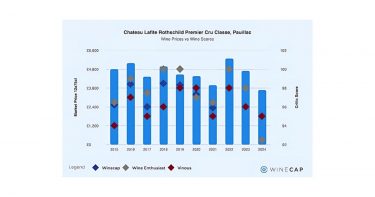
The 2024 vintage emerged as the most attractively priced Lafite in recent memory. In fact, only one other vintage from the past 40 years comes within 25% of its release price. Even lower-rated vintages like 2013 and 2007 – both released before the transformative investments that elevated Lafite’s quality – now trade at considerably higher levels.
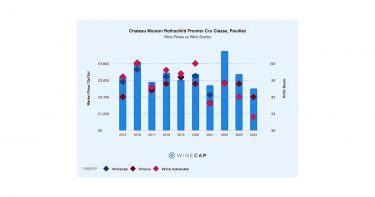
Much like Lafite, the 2024 Mouton Rothschild represents a rare opportunity. It is the best-priced Mouton vintage currently available on the market. Adjusted for inflation, only one other vintage in the last two decades compares in affordability. 

Moreover, Mouton has been the best-performing First Growth over the last five years, while also being Wine-Searcher’s most searched-for wine globally. 

History shows that these ‘less celebrated’ vintages often outperform their more hyped counterparts. For both Lafite and Mouton, vintages such as 2007, 2008, 2013, and 2014 have significantly outpaced the more acclaimed 2009, 2010, or 2016 in price performance.
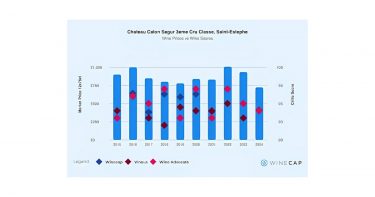
Another notable performer is Calon Ségur. While it may have flown slightly under the radar, its 2024 release represents the best entry point into the brand in over a decade. Calon has built a strong reputation among critics, frequently earning 95+ scores from Wine Advocate and Vinous. 

Its investment credentials are equally impressive: between 2015 and 2023, Calon prices surged more than 80%. Even with recent market dips, our Calon Ségur index remains 75% higher than it was ten years ago – making it one of Bordeaux’s most dynamic performers.
Looking for more? Read our Bordeaux Regional Report.
Categories
News

Wine Advocate’s top-scoring Bordeaux 2024 wines

  • William Kelley defines Bordeaux 2024 as the ‘weakest vintage of the last decade’.
  • The vintage is characterised by challenges – weather and economic. 
  • Kelley’s top three wines achieved a barrel range of 94-96 points.

The Wine Advocate was among the first to release their Bordeaux 2024 En Primeur report last week, with William Kelley calling it the ‘weakest vintage of the last decade’. The report, titled ‘Ripeness is all’, highlights the challenging weather conditions and the growers ability to time the harvest, which played a crucial role in the making of the best wines. 

The style of the vintage

For Kelley, 2024 is not a Left or a Right Bank vintage; he argued that it ‘can only be understood on a producer basis’. 

For him, it is ‘more of a throwback, exhibiting flavors more familiar from the decade of the 1990s than more recent years’. The best wines show ‘the estate signature’ style and possess a ‘strong identity’. 

Kelley explained that ‘the most compelling 2024s are intensely flavored middleweights with good structure and energy, exhibiting integrated acidity and ripe tannin’.

‘A handful of wines, often thanks to a riskily late harvest and generally from early-ripening sites, even possess a density and mid-palate amplitude that transcends the year and which will render them hard to identify in blind tastings a decade from now’, he continued.

To achieve these results, terroir was crucial: ‘better-drained, earlier-ripening plots fared best’ in a year defined by cold and rain. Sorting was important too but only for fully ripe grapes.

Vintage challenges

Bordeaux 2024 will go down in history as a challenging vintage – first, due to the weather, and second, the macroeconomic context, including the waning sentiment towards the En Primeur system.

When it comes to the weather, it was a year of negative records. Kelley noted that ‘March-May saw 35% more rainfall than the 20-year average, making 2024 the third wettest spring recorded, after 1979 and 2008’. This delayed flowering, leading to uneven ripeness within bunches, which could have only been mitigated by patience. 

Rain and falling temperatures in September presented more obstacles – botrytis, and slower degradation of acidities and pyrazines. Many producers were quick to harvest – often underripe grapes; those that dared to wait gained ‘mid-palate amplitude and degrading pyrazines in the process, even if analytical maturity alone registered little change’.  

Now that the vintage is being released onto a downward market, Bordeaux is facing mounting pressure. In his report, Kelley wrote: ‘An excellent vintage at a very fair price might perhaps have been capable of reigniting some interest in en primeur, but it seems unlikely that 2024, beyond a handful of châteaux, will be able to achieve that.’

He concluded that ‘if Bordeaux rides high in good times, it is unavoidable that the region should also experience market lows particularly acutely. Bordeaux will be back, of course, it’s only a matter of time.’

Selectivity is key

Given this vintage background, strict selectivity when purchasing Bordeaux 2024 will be key. Beyond pricing, which has to be fair in the context of older vintages, critic scores play an important role. 

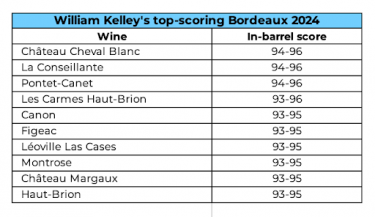
Kelley’s highest score for this vintage was a barrel range of 94-96 points, which went to three wines: Cheval Blanc, La Conseillante and Pontet-Canet (released on 23 April).

Of the three, La Conseillante has been the best price performer on a brand level, rising over 70% in value over the past decade, and considerably outperforming the broader Bordeaux market. 

For Kelley, these three wines were the ‘stars of the vintage’. For Cheval Blanc, he explained that ‘Pierre-Olivier Clouet and his team conducted an aggressive green harvest and also, exceptionally, used densimetric sorting to mitigate heterogenous maturity between and within bunches, accepting losses to rot in pursuit of full maturity.’ 

Sorting was also strict at Conseillante, which is ‘a blend of 80% Merlot and 20% Cabernet Franc that produced 22 hectoliters per hectare after extensive sorting’.

When it comes to Pontet-Canet, Kelley said that the final wine ‘underlines the fact that daring to harvest late paid dividends in this challenging vintage, wafting from the glass with aromas of cassis, black raspberries and plums mingled with accents of rose petals, licorice and exotic spices.’

See also our Bordeaux I Regional Report

WineCap’s independent market analysis showcases the value of portfolio diversification and the stability offered by investing in wine. Speak to one of our wine investment experts and start building your portfolio. Schedule your free consultation today.

Categories
News

James Suckling’s top 100 wines of 2024

  • James Suckling’s top 100 wines of 2024 list has been released.
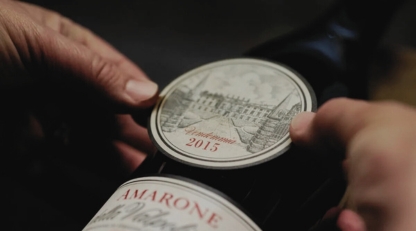
  • His wine of the year is Bertani Amarone della Valpolicella Classico 2015. 
  • Italy dominates the rankings followed by France and the US.

American critic James Suckling has released his top 100 wines of 2024 list, along with his wine of the year. Based on tens of thousands of bottles tasted and rated over the year, the list highlights wines that combine exceptional quality, character, and accessibility.

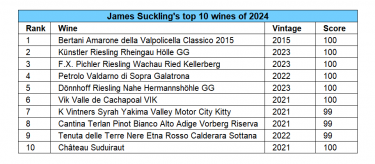
For 2024, Suckling’s Wine of the Year is Bertani Amarone della Valpolicella Classico 2015, awarded a perfect 100-point score. Italy dominates the rankings overall, followed by France and the United States, reflecting both traditional strongholds and evolving global demand.

This article breaks down the James Suckling Top 100, explains how the list is compiled, explores regional performance, and highlights what collectors and investors can learn from the 2024 results.

How the James Suckling Top 100 is compiled

James Suckling’s rankings are underpinned by scale and consistency. Over the past year, Suckling and his international tasting team reviewed more than 40,000 wines, producing detailed tasting reports, vintage analyses, and regional breakdowns.

Unlike many critics, Suckling’s approach is deliberately broad. The bottles tasted and rated span:

  • Everyday wines priced below $20

  • Estate wines from leading regions such as Bordeaux, Burgundy, and Napa Valley

  • Limited-production cuvées from small, high-quality producers

The Top 100 list is then selected from this vast dataset, based on more than just numerical scores.

Criteria for inclusion in the Top 100

To qualify for the James Suckling Top 100, wines must meet several key criteria:

  • Minimum production of approximately 5,000 bottles

  • Median release price below $500 (£385)

  • A score typically between 97 and 100 points

  • What Suckling describes as a “wow factor” – an emotional impact that elevates a wine beyond technical excellence

This ensures the final list balances prestige with real-world availability, creating a list of wines that is both aspirational and practical for collectors.

A record year of tasting: More than 40,000 wines reviewed

The scale of Suckling’s tasting operation is unmatched. In 2024 alone:

  • More than 40,000 bottles tasted and rated

  • Hundreds of tasting reports published

  • Wines assessed across all major regions and styles

Each wine is evaluated blind where possible, with scores reflecting overall quality, balance, structure, and ageing potential. These tasting notes form the backbone of the final Top 100 ranking.

Regional overview: Italy leads the James Suckling top 100

Italy once again emerged as the strongest-performing country in the 2024 rankings.

Total wines reviewed in 2024

The countries with the largest representation included:

  • Italy – 9,100 wines

  • France – 9,000 wines

  • United States – 6,800 wines

  • Spain – 3,800 wines

  • Argentina – 2,300 wines

  • Germany – 2,000 wines

  • Australia – 1,700 wines

  • Chile – 1,550 wines

Additional tastings included wines from Greece, Hungary, Canada, Uruguay, and China, highlighting the increasingly global scope of Suckling’s work.

Countries featured in the James Suckling Top 100

Despite intense competition, Italy secured 26 places in the Top 100 – more than any other country. These wines span a wide range of styles and regions, including:

  • Amarone della Valpolicella

  • Barolo

  • Brunello di Montalcino

  • Alto Adige whites

  • Super Tuscan blends

France followed with 18 wines, led by Bordeaux, Champagne, and the Rhône Valley. Burgundy Grand Crus and structured Rhône reds continue to perform strongly, reinforcing France’s long-standing reputation for producing great wine.

The United States placed 15 wines on the list, driven largely by Napa Valley Cabernet Sauvignon and Oregon Pinot Noir. This confirms the continued global appeal of top-tier American producers.

Germany delivered 12 wines, a standout performance that underscores the growing recognition of dry Riesling as one of the world’s most precise and age-worthy styles.

Chile, Australia, Argentina, and Spain also featured, while China made a notable appearance with Ao Yun Shangri-La 2020, reflecting its rising status in the fine wine market.

Wine of the Year 2024: Bertani Amarone della Valpolicella Classico 2015

At the top of the ranking is Bertani Amarone della Valpolicella Classico 2015, which received a perfect 100-point score.

James Suckling describes the wine as a benchmark expression of Amarone, praising its balance between power and elegance. His tasting notes highlight:

  • Full-bodied structure

  • Filigree, refined tannins

  • Bright, persistent acidity

  • A long, savoury, and complex finish

Suckling calls it a wine that expresses “the greatness of time and place”, emphasising its ability to age gracefully while remaining compelling today.

The selection of an Amarone as Wine of the Year is particularly significant. It reflects growing international appreciation for Italy’s traditional red wines beyond the established icons of Barolo and Brunello.

James Suckling top wine scores 2024

Value and accessibility: a defining theme of 2024

One of the most striking aspects of the James Suckling Top 100 Wines of 2024 is its focus on accessibility.

According to Suckling:

  • Nine wines in the Top 100 are priced between $30 and $60

  • Many highly rated white wines remain attractively priced

  • The second-ranked wine on the list retails for around $65 (£50)

This emphasis on value reflects changing market dynamics, where consumers and collectors alike are seeking great wine without excessive price inflation.

Notable regional highlights

Germany’s breakthrough year

Germany’s strong showing confirms the exceptional quality of recent vintages, particularly for dry Riesling. Wines such as Künstler Riesling Rheingau Hölle GG 2023 demonstrate precision, minerality, and ageing potential.

Austria’s continued rise

Austria continues to build momentum, especially with wines from Wachau. These bottlings offer clarity of terroir and consistency across vintages.

China’s growing presence

The inclusion of Ao Yun Shangri-La 2020 marks a milestone for Chinese wine. Produced at high altitude in the Himalayan foothills, it showcases craftsmanship, innovation, and a distinct regional identity.

What collectors can learn from the James Suckling Top 100

The Top 100 is a snapshot of the global fine wine landscape.

For collectors and investors, it highlights:

  • Shifting stylistic preferences

  • Regions delivering strong value

  • Wines with long-term ageing potential

  • Emerging regions beyond traditional powerhouses

Whether searching alphabetically by winery, sorting by vintage score, or exploring tasting reports, the list offers a curated starting point for building a diverse and forward-looking cellar.

Final thoughts

The James Suckling Top 100 Wines of 2024 reflects a wine world in transition which values authenticity, balance, and accessibility alongside technical excellence.

From Amarone in Veneto to Riesling in Germany and Cabernet Sauvignon in Napa Valley, the list captures the diversity and excitement of today’s fine wine market. For collectors, it provides a reliable guide to wines that deliver both immediate pleasure and long-term promise.

WineCap’s independent market analysis showcases the value of portfolio diversification and the stability offered by investing in wine. Speak to one of our wine investment experts and start building your portfolio. Schedule your free consultation today.

Categories
News

Jeb Dunnuck’s top-scoring Southern Rhône releases

  • Jeb Dunnuck recently reviewed two vintages from Southern Rhône – the 2021 in bottle and 2022 in barrel.
  • He described 2022 as a ‘clear step up over 2021’.
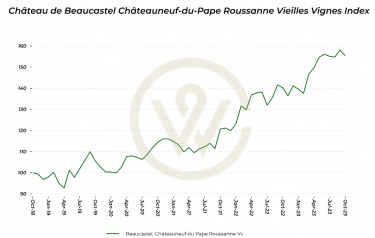
  • Château de Beaucastel’s Châteauneuf-du-Pape Roussanne Vieilles Vignes 2022 received 100 points from the critic, and prices for the label have risen 60% in the last five years.

Last week, Jeb Dunnuck released his latest Southern Rhône report, reviewing the 2021 vintage from bottle and the 2022 mostly from barrel.

The critic observed that ‘the time of truly bad vintages is mostly over’ given ‘the advances in viticulture and winemaking’. This is especially true for ‘a region like the southern Rhône, which has so much flexibility with grape varieties and different terroirs’.

2021 – drinking rather than collecting

The 2021 Southern Rhône vintage was marked by devastating springtime frosts, which dramatically reduced yields. A cool, rainy year led to ‘forward and charming [wines], with mid-weight, linear, fresher profiles,’ according to Dunnuck.

Dunnuck said that ‘2021 is not a great vintage’ when tasted next to a top 2019, 2016 or 2010. While he commended the accessibility and finesse of the wines, which would be ‘loved by sommeliers’, the critic noted that ‘it’s not a vintage to seek out or buy in massive quantities for the cellar’.

2022 – checks in ‘behind the greats’

Dunnuck described the 2022s as ‘a clear step up over 2021s’. He noted that the vintage bears some similarities ‘to 2020 and 2011, if not a more linear, mid-weight version of 2009’. For him, ‘2022 looks to check in behind the greats of 2019, 2016, 2010, and 2007’.

However, the critic concluded that ‘the divergent styles throughout the region make 2022 a difficult vintage to describe in broad statements, so it’s a vintage that readers will need to approach on an estate-by-estate basis’.

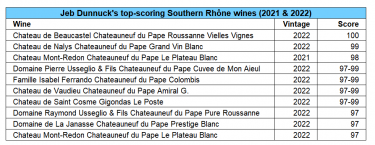
Dunnuck’s top-scoring wines across both years can be seen in the table below.

Across both years, Jeb Dunnuck found perfection in one wine – Château de Beaucastel’s Châteauneuf-du-Pape Roussanne Vieilles Vignes 2022. Awarding it 100 points, he called it ‘pure Beaucastel magic’. Average prices for the label have risen 101% over the last decade, and 60% in the last five years.

The Rhône’s investment performance in 2023

Prices for the top Rhône labels have been falling this year. Across the Liv-ex 1000 regional sub-indices, the Rhône 100 has experienced the biggest decline, down 18.1%.

However, young vintages like 2019 and 2020 have been in demand. Moreover, some wines from Southern Rhône such as Château de Beaucastel Châteauneuf-du-Pape Blanc have been on an upward trend, rising 32.8% on average.

WineCap’s independent market analysis showcases the value of portfolio diversification and the stability offered by investing in wine. Speak to one of our wine investment experts and start building your portfolio. Schedule your free consultation today.