Categories
News

James Suckling’s top wines of 2024

  • American critic James Suckling has released his top 100 wines of 2024 list.
  • His wine of the year is Bertani Amarone della Valpolicella Classico 2015. 
  • Italy dominates the rankings followed by France and the US.

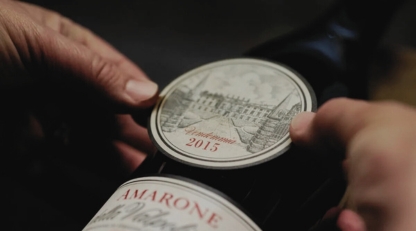
American critic James Suckling has released his top 100 wines of 2024 list, along with his wine of the year. The highest accolade went to Bertani Amarone della Valpolicella Classico 2015, which according to the critic, is a classical wine that embodies ‘the greatness of time and place’.

Regional distribution

Suckling and his team tasted and rated over 40,000 different wines over the past twelve months. The majority were from Italy, which accounted for over 9,100 of the reviewed wines, followed closely by France with 9,000, the US with 6,800, Spain – 3,800, Argentina – 2,300, Germany – 2,000, Australia – 1,700, and Chile nearly 1,550. They also tasted wines from other regions worldwide including Greece, Hungary, Canada and Uruguay.

Italy also dominated the list of their favourites, featuring with 26 wines in the top 100, followed by France (18), the United States (15), Germany (12), Argentina (6), Spain (6), Chile (6), Australia (5), Austria (4), South Africa (1) and China (1).

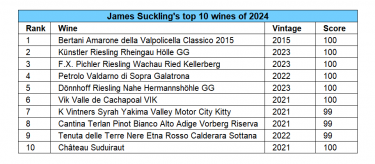
Suckling’s top 10 wines of 2024

James Suckling’s wine of the year is the 2015 Bertani Amarone della Valpolicella Classico, which he described as ‘full-bodied and elegant on the palate due to ripe, filigree tannins with long acidity and a toasty, savory aftertaste’. He called it ‘one of the great Amarones’ and gave it a 100-point score.
James Suckling top wine scores 2024

The top wines of the year were chosen on the basis of quality, price, and what Suckling calls the “wow factor,” an emotional impact a wine can have on the drinker. Most wines on the list scored between 97 and 100 points, with nine wines priced between $30 and $60 (£23 and £46), emphasising affordability alongside quality. Wines on the list were required to have a minimum production of 5,000 bottles, with a median price below $500 (£385).

Regional standouts

Germany had a standout year in 2023, particularly for its dry Riesling, with the Künstler Riesling Rheingau Hölle GG 2023 ranking second on the list and exemplifying the structured, balanced nature of this vintage.

Austria continued to gain critical recognition, especially for its white wines, with F.X. Pichler Riesling Wachau Ried Kellerberg 2023 taking the third spot. 

China was also present on the list with Ao Yun Shangri-La 2020, a wine from Moët Hennessy’s Yunnan winery, signaling the country’s growing role in the fine wine market.

Accessibility and value

Suckling noted that many of his favourite wines offer high quality at accessible price points. The focus on value addresses current concerns about the market’s downturn. For example, the wine that took the second spot is priced around $65 (£50), while Italian whites such as the Manincor Sauvignon Blanc Alto Adige Tannenberg 2022 are available for approximately $40 (£31).

Emerging trends

Suckling’s report further highlights an increasing interest in German and Austrian wines, especially among younger consumers, due to their quality and value. Events like Suckling’s Great Wines series, held across major cities globally, have drawn over 21,000 attendees this year. With wines from more established to emerging wine regions, Suckling’s 2024 list provides a guide to the critic’s top picks from across the globe.

WineCap’s independent market analysis showcases the value of portfolio diversification and the stability offered by investing in wine. Speak to one of our wine investment experts and start building your portfolio. Schedule your free consultation today.

Categories
Learn

The role of wine ratings in fine wine investment

  • Wine ratings play a crucial role in wine investment, with high scores from influential critics impacting demand and market value.
  • To use ratings effectively, investors should consider both the initial score and potential for growth.
  • The Wine Track score provides a broader view of a wine’s quality across multiple vintages and publications, helping investors assess wines at a glance.

In the fine wine market, few factors influence demand and long-term value as significantly as wine ratings. For investors seeking to build an investment grade wine portfolio, scores from leading critics help signal quality, potential longevity, and the likelihood of future price appreciation on the secondary market. Yet while ratings can be powerful indicators, their relationship with wine investment is more nuanced than simply “higher score = better investment.”

When used intelligently, ratings become a strategic tool – one that helps investors compare wine producers, evaluate vintage quality, understand wine maturity, and identify undervalued opportunities before they rise in price. This article explores how critics shape the market, how scores evolve over time, and why aggregated metrics like the Wine Track score offer a more holistic assessment of investment wines.

Why wine ratings matter to investors

For decades, wine critics have shaped perceptions of quality and influenced global buying behavior. Ratings – most commonly expressed on a 100-point scale – serve as a shorthand for quality, providing investors with a quick way to compare wines from different regions, vintages, and producers.

But ratings go beyond simple quality indicators. They offer signals about:

  • Longevity: Wines with high ratings often have a longer projected drinking window, increasing their long-term value.

  • Demand: Collectors and consumers actively seek high-scoring wines, driving secondary market demand.

  • Stability: Consistently well-rated producers, especially in Bordeaux, Burgundy, and Napa Valley, tend to show more stable price trajectories over time.

  • Investment potential: A rising score – or consensus recognition across critics – often correlates with rising prices.

High scores from influential voices such as Robert Parker, Neal Martin, Jancis Robinson, James Suckling, and publications like Wine Spectator can move market prices almost overnight. For this reason, ratings have become essential to assessing investment grade wine, particularly among new investors building long-term portfolios.

How ratings influence the fine wine market

The fine wine market thrives on reputation, scarcity, and critical acclaim. When a wine receives a benchmark score – such as 100 points – it enters a new tier of desirability. Collectors take notice, merchants adjust pricing, and global demand increases.

1. Ratings drive immediate price reactions

When Wine Spectator announces its “Wine of the Year,” prices often jump dramatically on the secondary market. A clear example is Marqués de Murrieta Castillo Ygay Gran Reserva Especial 2010, which surged in price within hours of receiving the top spot.

Similarly, Parker’s 100-point scores for specific Bordeaux châteaux have historically pushed prices upward within days. Investment wines that once traded at reasonable levels suddenly become high-demand commodities.

2. Ratings shape long-term reputation

Some producers enjoy sustained market strength because of their track record of high ratings.

Examples include:

  • Domaine de la Romanée-Conti (Burgundy)

  • Château Lafite Rothschild (Bordeaux)

  • Harlan Estate (Napa Valley)

  • Gaja (Piedmont)

  • Penfolds Grange (Australia)

Consistency matters. When a producer repeatedly earns high critic scores, collectors gain confidence in their wines as long-term stores of value.

3. Ratings influence regional prestige

Critics can elevate entire regions:

  • James Suckling helped cement the global appeal of Super Tuscan wines in the 1980s and 90s.

  • Robert Parker transformed Napa Valley’s reputation by championing bolder styles of Cabernet Sauvignon.

  • Jancis Robinson brought Austrian wines into the international spotlight through her praise for their complexity and quality.

Strong critical support can reposition a region within the broader investment landscape, increasing demand and raising long-term value trajectories.

Ratings change over time – And so do investment opportunities

A crucial but often overlooked aspect of wine ratings is that they evolve. As fine wine matures in bottle, its character develops, tannins soften, and structure harmonises. Critics revisit wines at different stages of their drinking window, sometimes raising or lowering their scores.

The impact of score revisions

  • Upward revisions can significantly increase a wine’s secondary market price.

  • Downward revisions may reduce demand or dampen price momentum.

  • Some wines receive “barrel scores” or early tasting notes before bottling, making their final ratings even more impactful.

This score evolution creates opportunities for savvy investors:

  • Buy early: Identify wines with strong barrel scores or promising critic commentary.

  • Hold strategically: Wait for maturity to unlock higher scores and higher prices.

  • Sell at the peak: Monitor the drinking window and score trajectory to time exits effectively.

Understanding how ratings move during a wine’s maturity curve allows investors to spot undervalued vintages or producers poised for upward recognition.

Knowing the critics and selling wine

To use ratings effectively, investors should consider both the initial score and potential for growth. Some wines, especially those from renowned producers in prestigious regions like Bordeaux or Burgundy, are consistently well-rated and have a history of aging well. However, there are also opportunities to find “sleeper” wines – those with moderate initial ratings that improve significantly over time.

A key part of understanding and using wine ratings is understanding the critics. Each has a different palate and preference, and their ratings reflect these tastes. Robert Parker, for instance, was known for favouring bold, robust wines from Bordeaux, California, and the Rhône. However, since Parker’s retirement, the wine criticism landscape has been undergoing a gradual shift, reflecting changing consumer preferences and a growing appreciation for diversity in wine styles, such as lighter and lower-alcohol wines.

The Wine Track score – ratings at a glance

While individual critic ratings are valuable, they can sometimes conflict. To address this, investors are increasingly turning to aggregated metrics like the Wine Track score, developed to provide a unified evaluation of quality.

What the Wine Track score offers

  • A 100-point unified score across multiple vintages.

  • Data from 100+ global critics and 12 major publications.

  • A holistic view that smooths out individual critic biases.

  • Consistency assessment across vintages – useful for evaluating wine producers’ long-term performance.

  • At-a-glance insight into which wines are outperforming their peers in the fine wine market.

For investors, this provides a clearer, more reliable measure of investment grade wine potential, especially when comparing estates, regions, or vintages.

How investors can use wine ratings strategically

To incorporate ratings effectively into an investment strategy, consider the following frameworks:

1. Identify consistently high-scoring producers

Bordeaux First Growths, Burgundy Grand Crus, and top Napa Valley Cabernet producers show stable performance because of strong, reliable ratings year after year.

2. Look for “sleeper vintages”

Some vintages fly under the radar initially but gain recognition as they mature. Moderate early ratings that improve later often lead to strong price appreciation.

3. Pay attention to vintage variation

Even top wine producers experience vintage variability. Ratings can help pinpoint which years offer the best long-term value.

4. Use aggregated data for clearer insights

The Wine Track Score consolidates information, helping investors avoid over-reliance on a single critic’s preference.

5. Align purchases with drinking windows

Wines nearing peak maturity often increase in price as demand from drinkers rises. Ratings can help map these windows and guide buying or selling timing.

Ratings are a guide – Not the whole story

Although ratings significantly influence investment wines, they are only one factor in determining long-term value. To build a strong fine wine portfolio, investors should also consider:

  • Producer reputation

  • Region and vineyard classification

  • Market liquidity

  • Storage conditions

  • Historical performance of the secondary market

  • Long-term demand trends

Wine ratings are most powerful when used alongside these broader market insights.

Using ratings to build a strong wine portfolio

In the evolving landscape of the fine wine market, ratings remain one of the most influential tools available to investors. They provide clarity, signal quality, and help highlight which wines are most likely to appreciate over the long term. With aggregated systems like the Wine Track Score, investors now have access to richer, more comprehensive insights than ever before.

Ultimately, wine ratings are not the sole determinant of success –but when paired with market knowledge, storage discipline, and strategic buying, they can be instrumental in building a high-performing, investment grade wine portfolio positioned for strong long-term returns.

WineCap’s independent market analysis showcases the value of portfolio diversification and the stability offered by investing in wine. Speak to one of our wine investment experts and start building your portfolio. Schedule your free consultation today.