Categories
News

Bordeaux 2022 leads critics’ top wines of 2025

  • Global critic lists show unprecedented diversity across regions and styles.
  • Bordeaux 2022 was in the spotlight across major publications.
  • Collectible wines and investment-grade wines differ – only some critic favourites have long-term market potential.

Each November, major critic publications around the world release their annual Top 100 wines of the year rankings. Rather than showcasing the wines only released in the past twelve months, the lists highlight standout bottles tasted throughout the year, spanning vintages, regions, and stylistic expressions.

A clear trend emerges from looking at past and current lists: increasing diversity. Critics are no longer focusing exclusively on tried-and-true regions like Bordeaux, Napa, or Barolo. Instead, their selections – this year spanning wines from Etna to Stellenbosch, Central Otago to Morgon – reflect the global expansion of fine wine quality, elevated vineyard management, and the growing maturity of the market.

Critic choices largely align with broader shifts seen in the fine wine investment landscape. As quality rises around the world, more wines now boast age-worthiness, critical acclaim, and technical precision. However, this raises an important point: not all critic-favourite wines carry investment potential.


A collectible wine may be rare, high-scoring, or culturally important, while an investment-grade wine must also demonstrate a proven secondary-market track record, liquidity, stable long-term demand, and price performance history.


Below, we explore three of the most influential 2025 global rankings and what the top wines reveal about the state of the fine wine market going into 2026.

Wine Spectator’s Wine of the Year

Wine Spectator’s annual Top 100 list is arguably the most commercially impactful ranking in the global wine calendar. Historically, the No. 1 Wine of the Year has triggered immediate surges in demand, and often dramatic price rises, across global markets. A clear example came in 2023, when Argiano Brunello di Montalcino 2018 – previously quiet on the secondary market – experienced a rapid uptick in both demand and value within days of receiving the top spot.
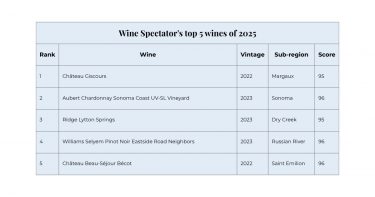
Wine Spectator's top 5 wines 2025

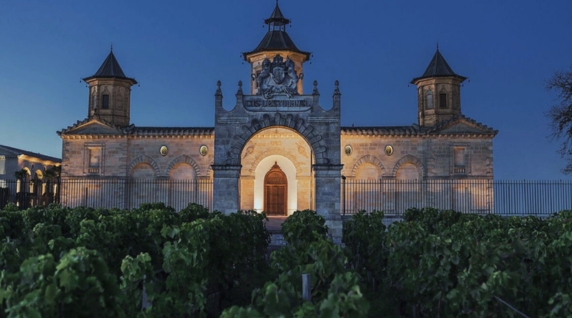
In 2025, the top position went to Château Giscours 2022, marking a major endorsement for Bordeaux’s strong 2022 vintage at a time when the region often finds itself facing criticism. Senior Editor James Molesworth explains: ‘Recent vintages have been mercurial in quality, while the region’s annual spring en primeur campaigns have fizzled. Tariffs haven’t helped. But if you needed a reminder that Bordeaux still makes some of the greatest wines in the world – and that its producers can evolve with changing times – the Château Giscours Margaux 2022 is your wine. This third-growth classified estate earns our top honor this year.’ 

Molesworth further highlights the wine as the culmination of decades of rebuilding work at the estate: ‘The efforts of Van Beek to surpass numerous obstacles over a generation is a clear example of how wine is a long game.’ The critic notes that recent improvements, including refined harvesting practices and guidance from consultant Thomas Duclos, have helped elevate quality, vintage after vintage. In 2022, these efforts culminated in a grand vin that Wine Spectator describes as fresh, seductive and finely detailed, with no second wine produced due to the exceptional quality of the harvest.

The rest of the top four represent a strong showing for California. Aubert’s UV-SL Chardonnay (No. 2) was praised as the union of ‘a renowned winemaker, a special vineyard and an exceptional vintage.’ Meanwhile, Ridge’s Lytton Springs 2023 and Williams Selyem’s Eastside Road Neighbors Pinot Noir 2023 reflect the continued strength and stylistic diversity of Californian wine across Dry Creek Valley and Russian River Valley.

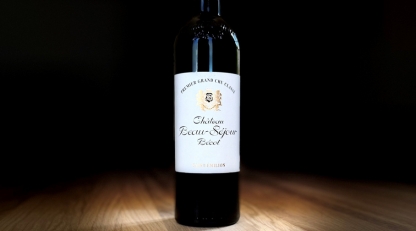
Rounding out the top five is another Bordeaux 2022 wine: Château Beau-Séjour Bécot. Wine Spectator calls it a ‘dreamy wine’, reinforcing the broader pattern seen across both critic and market attention this year. Bordeaux 2022 is clearly one of the defining narratives of the 2025 rankings, earning major positions across multiple publications.

Vinous’ top 100 wines of 2025

Vinous’ annual list, which Antonio Galloni says aims to capture the ‘diversity and dynamism of today’s wine world,’ showcases wines of exceptional quality, character, and excitement rather than simply the highest-scoring bottles.
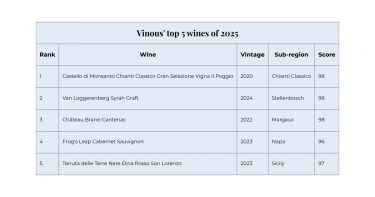
Vinous' top five wines 2025

This year, Italy takes the top spot with Monsanto’s Il Poggio, which Galloni calls “a total stunner” and “one of the very finest Il Poggios ever made.”

One of the most notable placements comes at No. 2: Van Loggerenberg’s “Graft” Syrah 2024 from South Africa. Neal Martin awarded it 98 points, praising its mineral character, balance, and crystalline finish – another sign of South Africa’s accelerating rise in fine wine quality.

The third wine in the list represents a more classical pick, but with a symbolic shift. With ownership passing to Henri Lurton’s children, Martin sees the 2022 Château Brane-Cantenac as a defining benchmark: ‘A year when… the 2022 is a benchmark for the Margaux estate, its future North Star.’

The list continues with strong representation from both New and Old World producers, including Frog’s Leap’s classically styled 2023 Cabernet Sauvignon and Tenuta delle Terre Nere’s deeply structured Etna Rosso San Lorenzo.

James Suckling’s favourite wines of 2025

James Suckling’s team tasted over 45,000 wines in the last year, making his Top 100 one of the most globally comprehensive. His selections prioritise balance and drinkability – wines that shine immediately, whether from bottle or barrel.
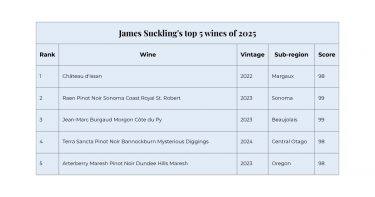
James Suckling's top five wines 2025

His top wine – Château d’Issan 2022 – reflects the broader dominance of Bordeaux’s 2022s across his list. Suckling emphasises that the vintage remains one of the biggest stories of the year, praising how the wines show focus, brightness and precision despite extreme heat and drought. He compares 2022 to other hot-vintage classics such as 1982, 1959, 1947 and 1928, all of which have stood the test of time, an important indicator for long-term growth. 

Suckling also notes how the accessibility of 2022 Bordeaux – widely released, easy to sample, and available across markets – enabled more comprehensive evaluation this year, contributing to their strong representation.

The remaining wines illustrate the global reach of modern fine wine quality. American Pinot Noir features prominently, with standout bottles from Raen and Arterberry Maresh. Meanwhile, two of the most surprising inclusions – Burgaud’s Morgon Côte du Py and Terra Sancta’s Bannockburn Pinot Noir – are also among the most affordable on the list, reinforcing Suckling’s point about the exceptional value emerging from Beaujolais and regions such as Central Otago. His report proposes that once-overlooked regions are now producing wines of extraordinary finesse and consistency.

Across all three critic rankings, a consistent narrative emerges: fine wine quality is more global, diverse and dynamic than ever before. At the same time, the spotlight on Bordeaux 2022 signals a vintage with both critical momentum and long-term relevance, firmly positioning it as one of the defining investment stories of the year.

Not every critically acclaimed wine is an investment wine, but the themes that surface – regional momentum, stylistic shifts, the performance of key vintages, and the critics’ influence on market behaviour – will all shape the fine wine landscape as we move into 2026.

WineCap’s independent market analysis showcases the value of portfolio diversification and the stability offered by investing in wine. Speak to one of our wine investment experts and start building your portfolio. Schedule your free consultation today

Categories
Learn

The rise of wine influencers and the power of the brand: Bordeaux Diaries Part II

Explore the rise of wine influencers and how Bordeaux estates balance authenticity, identity, and changing consumer expectations.

As wine criticism continues its transformation, a new force has emerged alongside traditional voices – the influencer. While formal critics retain a place of authority, many Bordeaux estates now acknowledge that digital personalities play a growing role in shaping perceptions, influencing purchases, and spreading the message of wine.

  • Influencers now shape opinions through social media, though their messaging often lies outside producers’ control.
  • Bordeaux estates are prioritising authenticity and estate identity.
  • Producers increasingly view the customer as the ultimate judge, trusting loyal drinkers over trends.

How wine influencers are shaping modern criticism

The majority of the chateaux interviewed by WineCap referred to the widespread use of social media as a tool in the wine critique space, recognising the parallel role of influencers to conventional commentary. Several also noted that quality and precision of influencer messaging was usually beyond a producer’s control, and not as accessible for them to engage with or oversee as traditional critique.  

Château Pavie, Premier Grand Cru Classé (B), Saint-Émilion

Robert Packer was definitely the most influential critic in the world of wine, and for Bordeaux particularly, and he’s actually done a lot of good things for Pavie, because he scored us 100 points four times in ten vintages, which is quite unique in Bordeaux,’ Olivier Gailly, commercial director at Pavie explained to WineCap. ‘Since he retired, we’ve seen more and more wine critics. Actually, almost every day we see new critics who are quite influential within his or her community or his or her country.’

Gailly described such personalities as ‘half influencer, half critic’.

‘We have to adapt. There is a lot of social media and there are influencers throughout this medium. The most important thing is to make sure they relay the right messages. They relay the truth of our terroir, of what the team is doing, and they talk through to the work we do with quality.’

Château Pape Clément, Grand Cru, Pessac-Léognan

‘The role of critics and journalists remains, but in my opinion, Parker was the best taster. I’ve never known any that were better, more precise, more honest in their decisions,’ said Bernard Magrez from Château Pape Clément. ‘Now, there are not just journalists but also influencers. There’s digital media that features a lot of short but quality programmes, with the mission to advise wine lovers.’

‘These programmes are often made by quality people, but not always,’ Magrez added. In any case, they provide the service of engaging with consumers, so they do not ‘make a mistake when choosing wine’. 

Estate identity and customer loyalty in modern wine marketing

As the wine world becomes increasingly noisy with a blend of critics, influencers, and online commentary, many producers are returning to the fundamentals: authenticity, estate identity, and customer loyalty.

Château Saint-Pierre, Fourth Growth, Saint-Julien

‘It is sometimes so difficult to handle, that we think that the main thing is to simply be proud of what we produce,’ explained owner of Château Saint-Pierre Jean Triaud to WineCap. ‘During En Primeur, there are maybe 30, 40, or even 50 people telling us they can offer influence for the wine. You get professionals, but you also get all the guys you don’t know writing online and maybe followed by, I don’t know, 100,000 people.’

Triaud said it was impossible and undesirable to produce wine that everybody liked. ‘So, we try to keep the identity of the wine and what the family wants to do.’

Château La Conseillante, Pomerol

‘Since Parker retired, the world of journalists has changed a lot. Now we do not have one journalist, we have a lot of journalists with different tastes,’ said Marielle Cazaux, general manager of Château La Conseillante. ‘So, for me, the wine has to keep its identity with all these different journalists. Before, with Parker, you had to just please one taste. Now it’s more and maybe it is a good thing’.

Château Beychevelle, Fourth Growth, Saint-Julien 

Philippe Blanc, general manager at Château Beychevelle, was adamant that the customer, and not the critic, was “king”.

‘The role of wine critics is very important but, as I am a very rude person, I said to somebody one day in London at a seminar that the most important people were the customers and not the journalists. Everybody laughed in the room, but I still believe that,’ he told WineCap. ‘Journalists are extremely important, they are knowledgeable, they are good guides but I think the best guide you can get is a customer himself. Now, if you need help, you can follow some journalists that you trust.’

With a multitude of journalists and influencers today, Blanc said he was not sure one single person took the lead. ‘I think as customers, you have to find the people you feel good with and then stick to them – but the most important thing is to open a bottle, to share it with friends and see if you like it and you give the mark you want then. It is important to feel comfortable with what you taste and not to follow somebody like you follow the shepherd’. 

Château Lynch-Bages, Fifth Growth, Pauillac

Perhaps the most direct remark about putting house identity first in today’s complex wine critique space came from Jean Charles Cazes, CEO of several properties, including Château Batailley and Château Ormes de Pez alongside Lynch-Bages.

‘We have had a consistent style and consistent practices over generations. I think it is important that you follow your style because fashions always evolve and change. If you try to follow the fashion, it will be out of date very quickly. So, we follow our own path.’

In today’s fast-moving and fragmented wine commentary landscape, the critic no longer reigns alone. Influencers bring reach and relatability, digital media expands access, and consumers themselves wield increasing influence over what succeeds. Yet amid this evolution, Bordeaux’s finest estates are charting a steady course – staying true to their identity, their terroir, and the loyal customers who bring their wines to life in glasses around the world.

See also our Bordeaux I Regional Report

WineCap’s independent market analysis showcases the value of portfolio diversification and the stability offered by investing in wine. 

Start your wine investment journey with WineCap’s expert guidance.

Categories
Learn

Do wine critics still matter in 2025? Bordeaux Diaries Part I

Discover how wine critics influence Bordeaux wine investment in 2025 and whether Robert Parker’s legacy still shapes today’s market.

Provenance, a good vintage, scarcity, and brand are all factors that influence the price of fine wine, and hence the world of wine investment. Another factor that has, traditionally, impacted wine value is the critic. A top score can inspire confidence in the price performance of a wine, while an unfavourable rating can have the opposite effect. 

However, is the role of the wine critic as important as it was in the past? With the retirement of the hegemonic world-renowned wine reviewer, Robert Parker, who helped put Bordeaux, California and the Rhône at the forefront of wine buyers’ minds, and the rise of digital media, what does the future hold?

WineCap met figures from leading Bordeaux estates for their insights into the place of wine criticism in 2025 and the years ahead. In Part I, we discuss the legacy and the evolving role of the wine critic.

  • Robert Parker’s era of singular influence is over – today’s wine criticism is a collective effort.
  • Critics still shape wine investment decisions, but their role is now one of many in a more democratic media landscape.
  • The rise of digital voices and ‘wine educators’ is expanding access and perspective in the fine wine world.

Wine criticism in transition: legacy vs digital influence

Several producers saw formal wine criticism as a keystone of information for customers, but also recognised that it was part of a developing media ecosystem largely because of the impact of the internet.

Château Valandraud, Premier Grand Cru Classé B, Saint-Émilion

Jean-Luc Thunevin, owner of Château Valandraud, thinks the importance of the traditional wine critic remains important for his château as the legacy of Robert Parker endures.

‘Parker had a hegemonic position; that is, he represented 80% of global influence. Today, in any case, there are collaborators who worked for him, who are very talented and who, two or three years ago, represented Parker’s influence,’ Thunevin told WineCap. ‘We can say that today, when you are a wine merchant, we use five or six major journalists, and we get an idea of what the wine is worth.’

Château Cheval Blanc, Saint-Émilion

‘In terms of the impact of the wine critics on the fame of our wines, we are very respectful of the job of the critics,’ Pierre-Oliver Clouet, technical manager at Château Cheval Blanc, explained. ‘We produce wine, there are wine distributors there to distribute the wine, there are wine collectors that collect the wine, and there are wine critics, who have to critique the wine. So, everybody has their own job in the wine world.’

The vast and varied selection of wine makes the role of the critic key, with Clouet adding that ranking wine estates, vintages, appellations, countries, and regions is important for consumers. 

‘The impact of critics is so important for the final client because the number of wines available on the market is huge. You have to find the critique who has your taste, and you have to follow him or her. This is the job: to help the consumer, to know more about what they’re going to purchase’.

Château Clinet, Pomerol

Ronan Laborde, managing director and owner at Château Clinet, is adamant that professional criticism is still an important fixture in the wine world, but acknowledges that information is more accessible to collectors and laymen alike today than in decades past. ‘We still need wine critique. When Robert Parker was reviewing and ranking, there was less wine criticism, and the web was not so widespread. Nowadays, there continue to be a lot of highly respectable wine critics.’

Laborde added that clients also have opportunities to bolster critic ratings with their own first-hand experience. ‘There are a lot of people who are really interested in wine and have the chance to visit wineries, taste the wines, and import the wines. So, it’s easier nowadays to try and have your own opinion than before. Robert Parker was a reference at the time he was active, but nowadays, it’s more split.’

Wine critique landscape in 2025: complexity and change

Château Margaux, First Growth, Haut-Médoc

Philippe Bascaules, managing director at Château Margaux, had an open-minded perspective on the shifting, changing, landscape of wine critique, not jumping to any conclusive opinion on its direction for the time being.

‘We are in a time when it’s very difficult to know the direction of journalists and social media and all this new communication, and how the consumers will use all of it to buy wine,’ he said. ‘Of course, it used to be so simple. Today, it’s much more complex and I think probably it’s even a good evolution, I would say, because then it can be a little bit more diverse, and everyone can find his own advisor. I think we are in transition and will know later exactly where it will lead and what it will mean.’

Château Coutet, Premier Cru, Sauternes

Other producers echo this sentiment. At Château Coutet, marketing director Aline Baly appreciates the rise of ‘wine educators’ who help spread awareness about lesser-known properties. 

‘In the last decade, we’ve seen a lot of new wine critics, or I also like to call them “wine educators” because they’re helping us get the message out there,’ marketing director Aline Baly told WineCap. ‘Some of the vineyards in this region are very tiny. We can’t be everywhere. We can’t be travelling and opening our wines and describing these wines. So, the wine critics, or wine educators help us get the message out.’

Regarding the growing number of critics, Baly was enthusiastic. ‘There is definitely a change from having very few people who are the spokespeople for all the vineyards in the world to a larger group of individuals who’ve come to visit, who’ve tasted wines and helped us get the message out there.’

Why wine critics still matter: education and expertise

Château Calon-Ségur, Third Growth, Saint-Estèphe

‘At the time of the Primeurs, we host many journalists from France and around the world,’ general director and owner of Château Calon-Ségur Vincent Millet said. ‘Today we have about fifteen journalists who come to taste the Primeurs every year. But what is also interesting is that these are the same journalists who will taste the wines when they are bottled, or a few months after bottling. So, they have a vision of a very young wine and a wine that has been aged in barrels, as well as a few months after bottling.’

This educational insider experience was invaluable for consumers, he added. ‘Today, what is interesting to see is that journalists have a culture of wine, follow the properties, follow the history of the property, and in some ways, these same journalists become true authorities on our wines. Even if we work with the brokers and merchants, the consumer will still look at the notes and comments of these same journalists. It is important for us to be able to explain how we work and what our philosophy is so that journalists can better understand the wines when they taste them’.

From Parker to pluralism: collective influence in wine

Several producers agree: the days of one critic dominating the wine conversation are behind us.

Château Pichon-Longueville Baron, Second Growth, Pauillac

‘I don’t think that we will ever again see one critic have such a completely dominant position as Robert Parker had. It was an accident of history in many ways. He just started at the right time, in 1982, when America was discovering the great wines of Bordeaux, and became accepted as the utterly reliable guide that he was,’ explained Christian Seely, managing director of AXA Millésimes, owner of Pichon-Baron

‘Today, there are many talented wine tasters and critics, and I think that it’s more of a collective influence. So, there will be perhaps a dozen really major critics who move the market, and I think on a collective basis, this is actually a much healthier thing. I think that for one person to have so much influence was probably slightly unbalanced and dangerous. These days, you can choose, as a consumer, from a number of very good critics and decide which ones you like best and follow them.’

Château La Mondotte, Premier Grand Cru Classé, Saint-Émilion

‘The time of the likes of Robert Parker is completely finished,’ said owner of Château La Mondotte Stéphane von Neipperg. ‘Now we will have perhaps five to ten well known wine critics for the consumer. So, it will be a much more open game. Parker was an important guy because he made what makes a good wine understandable for a lot of people. However, it is also good to have different opinions.’

Von Neipperg pointed to the 2021 vintage as an example of how critic viewpoints can vary significantly, supporting his view of the benefits of such diversity. ‘If you read about the ratings of 2021, there were sometimes five to ten points difference for the same wine.’

As Bordeaux and the broader wine world evolve, so too does the role of the critic – moving from singular gatekeeper to a chorus of trusted voices, guiding collectors, investors, and enthusiasts through an increasingly nuanced landscape.

See also our Bordeaux I Regional Report

WineCap’s independent market analysis showcases the value of portfolio diversification and the stability offered by investing in wine. 

Start your wine investment journey with WineCap’s expert guidance.

Categories
News

Bordeaux En Primeur 2024: critic scores and best releases

  • There have been some notable releases in a quieter En Primeur campaign. 
  • All of the top releases have represented the best entry point into their respective brands in the last decade. 
  • Critics have emphasised selectivity in a challenging vintage.

One month in since the start of the Bordeaux 2024 En Primeur campaign, which seems to be nearing its end, we look at critic scores and price trends to evaluate the best releases.

What the critics are saying

After the Wine Advocate’s William Kelley called Bordeaux 2024 ‘the weakest vintage of the last decade’, other critics have echoed his concerns with greater nuance. 

For Jane Anson, ‘the vintage was better than expected […] and clearly better than, for example, 2013 – and 2021 in the best cases.’

Meanwhile, Antonio Galloni (Vinous) observed: ‘The 2024s are all over the place in terms of quality and style, so readers will have to be selective. Within that context, the very best wines have a lot to offer.’ His ‘magnificent eight’ were Beychevelle, Clos Puy Arnaud, Cos d’Estournel, Jean Faure, Larcis Ducasse, Lascombes, La Conseillante and Rauzan-Ségla.

Neal Martin concluded his report, arguing that 2024 is ‘the ideal vintage for a reset’. He noted that ‘given the obstacles placed along the growing season, any 2024 that scores above 90 points is a success’. Martin’s highest barrel range was 96-98 points for La Mission Haut-Brion Blanc. Among the reds, his top wines with 95-97 points were Lafite Rothschild, Trotanoy, Lafleur and Vieux Château Certan.

The state of the market

As Bordeaux continues to lose market share to other regions, and fine wine prices overall are in a correction phase, releasing En Primeur has only worked with heavy discounts. We spoke with leading producers on how they determine their release prices, with strategies ranging from consulting négociants  and importers, and weighing in volumes and vintage quality. 

In his report, Martin speaks of the following reality: ‘There is no saviour riding over the horizon, no emerging country of insatiable Bordeaux-lovers, all against a backdrop of a vine-pull scheme […] and the fact that Bordeaux is wrestling with an image crisis.’ 

The solution? He goes back to the beginning of his career, when ‘off-vintages in the mould of 2024 would be discounted, and […] nobody lost face, including the grandest châteaux, and crucially, it kept the primeur system flowing, bottles passing through the distribution chain to the all-important final consumer’.

Within this context, we look at the releases that have worked so far – where pricing has aligned with trade and consumer expectations, and has offered a window for long-term profitability. 

Best En Primeur releases to date

One of the standout releases of the campaign has been First Growth Château Lafite Rothschild.

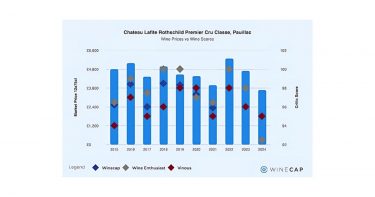
The 2024 vintage emerged as the most attractively priced Lafite in recent memory. In fact, only one other vintage from the past 40 years comes within 25% of its release price. Even lower-rated vintages like 2013 and 2007 – both released before the transformative investments that elevated Lafite’s quality – now trade at considerably higher levels.

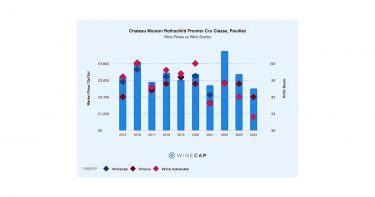
Much like Lafite, the 2024 Mouton Rothschild represents a rare opportunity. It is the best-priced Mouton vintage currently available on the market. Adjusted for inflation, only one other vintage in the last two decades compares in affordability. 

Moreover, Mouton has been the best-performing First Growth over the last five years, while also being Wine-Searcher’s most searched-for wine globally. 

History shows that these ‘less celebrated’ vintages often outperform their more hyped counterparts. For both Lafite and Mouton, vintages such as 2007, 2008, 2013, and 2014 have significantly outpaced the more acclaimed 2009, 2010, or 2016 in price performance.

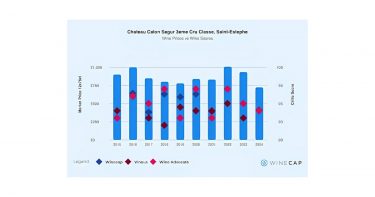
Another notable performer is Calon Ségur. While it may have flown slightly under the radar, its 2024 release represents the best entry point into the brand in over a decade. Calon has built a strong reputation among critics, frequently earning 95+ scores from Wine Advocate and Vinous. 

Its investment credentials are equally impressive: between 2015 and 2023, Calon prices surged more than 80%. Even with recent market dips, our Calon Ségur index remains 75% higher than it was ten years ago – making it one of Bordeaux’s most dynamic performers.

Looking for more? Read our Bordeaux Regional Report.

Categories
News

Bordeaux 2023 En Primeur: an overview of the current campaign

  • Three weeks into the Bordeaux 2023 En Primeur campaign, we examine the pricing trends of the releases so far.
  • In many cases, the current price cuts have highlighted the steady ascent of En Primeur release pricing in recent years.
  • The Bordeaux 2023 vintage is characterised by diverse critic scores and some high achievers.

This year’s Bordeaux En Primeur campaign kicked off early and rapidly gained momentum. The first 2023 releases landed in the last week of April, shortly after trade professionals had returned from the region and before the publication of most critic reports.

Pricing, as always, remained a central issue. Questions arose about whether châteaux would consider the current market conditions, whether anticipated price reductions would drive interest, and ultimately, whether the Bordeaux 2023 vintage would prove a worthy investment.

Three weeks into the campaign, several major châteaux, including First Growths like Haut-Brion, Mouton Rothschild, and Lafite Rothschild, have already launched their 2023 wines.

With most critic assessments now available and pricing trends becoming clearer, we delve into the details of the campaign so far.

Noteworthy releases

Château Léoville-Las Cases’ 2023 release marked a promising start to this year’s En Primeur. On April 30th, the wine was offered at a 40% discount on the previous year’s release. However, some older vintages still presented better value.

The first ‘great value’ release came from Château Lafite Rothschild in the same week. Its second wine, Carruades de Lafite, represented the lowest priced offering from the estate on the market today, playing on En Primeur’s original premise.

Similarly, Mouton Rothschild and Petit Mouton presented attractive opportunities for investors, released at 34.6% and 25.1% discounts on last year’s offerings respectively.

As a result, Liv-ex reported that both Château Lafite Rothschild 2023 and Château Mouton Rothschild 2023 have made their way onto the secondary market – although they have traded below their original release prices.

In many cases, the current price cuts have highlighted the steady ascent of En Primeur release pricing in recent years.

The average price cuts so far have been 21.5% compared to last year, with reductions ranging from 40% to none. Despite these cuts, many older vintages remain more affordable and often boast similar or better ratings, including those from 2019, 2017, and 2014.

Diverse scores and high achievers

The Bordeaux 2023 vintage has received a wide array of scores from leading critics, demonstrating a spectrum of quality across various appellations and estates.

Château Margaux consistently received high acclaim, with scores of 97-100 from both Antonio Galloni and William Kelley, and 99-100 from James Suckling. Neal Martin rated it as his second- highest wine of the vintage.

Another high achiever, Le Pin, received top marks with a perfect 100 from Peter Moser of Falstaff and 99-100 from Suckling. Château Montrose is also noteworthy, with a barrel range of 97-100 from Kelley and 99-100 from Suckling.

The critical consensus indicates a preference for wines from the Left Bank, which are noted to have fared better overall. The vintage is characterised by wines that lean towards a classic style, marked by their freshness and moderate alcohol content.

Despite the mixed nature of the vintage, there are several standout wines that show considerable promise. These wines are not only great for adding to a collection due to their potential to appreciate in value, but they also offer the kind of quality that makes them worth seeking out for those looking to enjoy fine wines in the years to come.

WineCap’s independent market analysis showcases the value of portfolio diversification and the stability offered by investing in wine. Speak to one of our wine investment experts and start building your portfolio. Schedule your free consultation today.